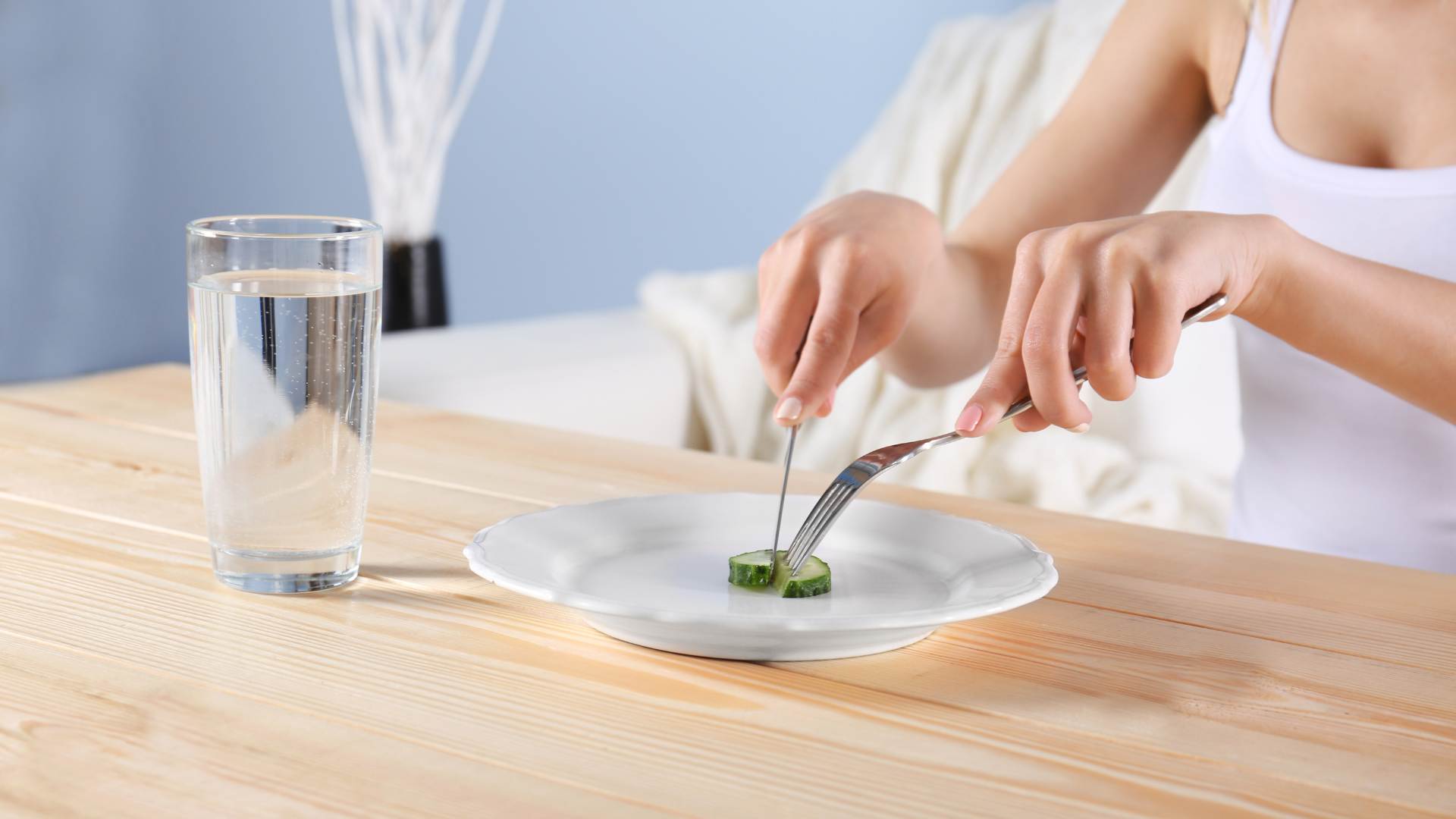
What happens when the hunger we feel has nothing to do with food and everything to do with unmet needs, emotional distress, or lack of support?
In this episode of the ANEW Insight Podcast, Dr. Supatra Tovar continues her powerful conversation with physician, author, and obesity medicine expert Dr. Adrienne Youdim. Together, they explore the promise and pitfalls of GLP-1 medications like semaglutide, address the myths surrounding sustainable weight loss, and offer a refreshing call to go deeper to understand what we’re truly hungry for.
This isn’t just a podcast about prescriptions it’s a dialogue about the soul of healthcare and what it takes to truly feel nourished, both physically and emotionally.
1. Weight Loss Isn’t About Willpower, It’s About Physiology
Dr. Youdim begins by reframing obesity as a physiological condition, not a moral failing. Once weight is gained, the body adapts in ways that resist weight loss—shifting metabolism, hormones, and appetite regulation.
That’s where GLP-1 medications come in. These drugs mimic natural hormones that tell the brain we’re full and slow down digestion. While they’ve helped thousands—including Dr. Youdim’s patients—she’s quick to point out that they’re not a cure-all.
“We tend to think of weight gain as a lack of discipline. But there are real biological systems involved. GLP-1s help level the playing field, but they don’t remove the need for nutrition, movement, and emotional work.”
2. The Scale Can Lie: Why Losing Weight Doesn’t Always Mean You’re Healthier
One of the most eye-opening parts of this episode is Dr. Youdim’s warning: weight loss doesn’t always equal fat loss.
When people lose weight rapidly through medication or surgery they often lose muscle mass, which can increase their percentage of body fat even if the number on the scale drops. This is critical, because high body fat and low muscle mass are linked to metabolic disease, fractures, and other long-term health risks.
“Nutritional quality during weight loss matters just as much as the weight loss itself,” she explains. “Otherwise, the success is cosmetic and temporary.”
3. The Hunger Beneath the Hunger
Both Dr. Youdim and Dr. Tovar stress that hunger is rarely just physical. A missed conversation with a partner, lack of sleep, chronic stress—these can all trigger cravings, not because we need calories, but because we need comfort, rest, or connection.
GLP-1s can temporarily quiet food noise, creating a unique opportunity to ask: What am I really hungry for?
“Maybe you’re at your laptop all day and feel the urge to snack. But the hunger is actually for a break, not a meal. Or you’re watching TV late at night but what you need is sleep. The body always tells the truth—we just need to listen.”
4. GLP-1s Are Not Forever: What Happens When Access Stops?
With insurance policies shifting and compounding pharmacies closing, many people are at risk of losing access to these medications. Dr. Youdim offers both compassion and clarity here.
She encourages patients to think about a maintenance plan early on: combining food-based GLP-1 stimulation (through high-protein, high-fiber meals), resistance training to protect muscle, and lifestyle changes like improving sleep and circadian rhythms.
“This isn’t about scaring people. It’s about being proactive and knowing your body can work with you, not against you.”
5. Misinformation Is the New Epidemic
From social media “experts” pushing fad diets to confusion over compounded medications, Dr. Youdim and Dr. Tovar raise concerns about the dangerous misinformation circulating online.
Dr. Youdim calls for nuance and critical thinking, inviting listeners to “be their own guru” and trust their instincts when advice seems too good to be true.
“You know when something sounds fishy like standing on your head while drinking cabbage juice,” she jokes. “We have to honor that inner voice and ask, ‘Does this really make sense for me?’”
6. A Multidisciplinary, Whole-Person Approach
Perhaps the most important message of this episode is that weight loss isn’t just about medication or macros it’s about meaningful, personalized care. That means involving a physician, a dietitian, a therapist, and most importantly the patient.
“Nutritional healing isn’t only about what you put on your plate. It’s the words you say to yourself, the company you keep, your willingness to rest, play, move, and reflect.”
Why This Episode Matters
In a culture of quick fixes and wellness hype, this conversation is a vital reset. It invites us to stop outsourcing our hunger to marketing or medication alone—and instead turn inward. To reclaim our own wisdom, with science and support as our guides.
Whether you’re on a GLP-1, considering one, or just trying to understand your relationship with food, this episode offers something rare: depth, dignity, and direction.
🎧 Listen to the full episode with Dr. Adrienne Youdim on the ANEW Insight Podcast
📺 Watch now on YouTube: @my.anew.insight
🌐 Stream it at: anew-insight.com under the Podcast tab
📘 Deepen your healing with Dr. Tovar’s award-winning book, Deprogram Diet Culture
💻 Join the comprehensive ANEW Insight course at anew-insight.com
View the full podcast Transcript here:
Dr. Supatra Tovar: [00:00:00] Welcome back to the ANEW Insight podcast. We’re back for the second half of our interview with author, physician, and weight loss specialist Dr. Adrienne Youdim. Dr. Adrienne gave us really amazing and invaluable insight into her inspiration to treat weight loss and the ways that she goes about treating weight loss.
Dr. Supatra Tovar: We also discussed her book, so if you missed the first half, you’ve gotta go back ’cause she is incredible. Dr. Adrienne , welcome back.
Dr. Adrienne Youdim: Thanks, Supatra. Nice to be here.
Dr. Supatra Tovar: Nice to have you here. So we are talking about weight loss medications and doing a big deep dive. And we know that they have been really life-changing for many, medically necessary for many, but they’re not without drawbacks. We started to get into that and what we’re seeing in terms of a rise of eating disorders or disordered eating. What are some of the most important pros and cons you believe patients and even other doctors need to be aware of with these [00:01:00] medications?
Dr. Adrienne Youdim: Well, I’m gonna start with saying that as we have the American Medical Association, I think it was back in 2006 qualified obesity as a disease. And I think this generates a lot of like emotion, but I think it was an important designation. The The reason being that essentially a disease indicates or means that something in our bodies has gone awry, right?
Dr. Adrienne Youdim: Like this, some kind of physiology, normal physiology has gone awry. And what we know is that when people gain weight for whatever reason. And they try to lose weight, that their body shifts, their hormones, their metabolism, fat enzymes. There are multiple physiologic mechanisms that shift to preserve that, that higher weight. [00:02:00] And so in order to lose weight and successfully maintain at a lower weight becomes physiologically difficult. We tend to look at this as like a lack of willpower or a lack, a character flaw, but there is a physiology or a pathophysiology that happens when people gain excess weight, and I think that’s important, and that’s what the designation of obesity allows us to recognize. So that being said, knowing that preserving that new weight is so complex and is managed by so many different hormones and systems and pathways. It’s wonderful to have a medication that actually helps. people’s appetite and hunger so that they can lose weight. And so what GLP-1 drugs are basically mimics of this [00:03:00] hormone called GLP-1 that we all naturally release when we consume food. This is a hormone that tells our brain, Hey, we got food down here. You can shut off that hunger valve. So it dampens hunger and appetite. It also slows down the gut so that the food can hang out there longer again potentiating amplifying this feeling of fullness and then it does a bunch of other things like help the body release insulin, and now we’re that it helps remodel the heart and perhaps protect the brain and all this other stuff that we definitely don’t have time to get into. For that reason, I really, I value this drug. On the other hand there are side effects. Now, the side effects and adverse effects, which are different than side effects in my mind. Now, the side effects that really, like, we kind of perseverated on people, vomit, people throw up. By and large, these can be mitigated through [00:04:00] diet I’ve been prescribing these drugs for years. I’ve prescribed them thousands of times to thousands of people. I can count literally Supatra on one hand the number of patients that I’ve had to say, I’m so sorry, your body just can’t tolerate this drug because of excessive vomiting or diarrhea or gut issues. But that’s like what we always hear about.
Dr. Adrienne Youdim: Right? And the reason we hear about it, I think, is because people aren’t being counseled on proper nutrition. GLP-1s are drugs that kind of, I always tell my patients it’s like the kind of food that that is not gonna make you feel good or wouldn’t have made you feel good otherwise
Dr. Adrienne Youdim: like that Mexican dinner with like the yummy fried chips, right? If you eat that on a GLP-1, the GLP-1 is gonna smack you on the hand. You’re just gonna feel more shitty. If I can say that, then you would have otherwise that’s what GLP-1 does. So I, that’s not what I really focus on because it’s not a problem for most of [00:05:00] my patients. What I do worry about though is what happens whenever people lose weight effectively, be it GLP-1 drugs, be it bariatric surgery, and that is that we can, the body does not pick and choose the muscle myocyte or muscle cell from the fat cell. What people don’t recognize is that you can lose weight on the scale, and yet your percent body fat, your body fat can go up, so like. don’t like to use the word fat, but you’re fatter even though on the scale, the numbers are lower. And the reason why this is important is because studies that show that people who have higher body fat, well, first of all, losing muscle affects your metabolism, your body composition, right? Makes it harder to maintain the weight. So there’s all of that. But if we zoom out [00:06:00] beyond weight and think about health, poor body composition is associated with metabolic disease, metabolic syndrome, higher levels of falls and fractures. so there’s a lot that goes into nutrition that is separate from weight and unfortunately, when people are losing weight, they’re so thrilled again to lose the weight. Or it’s happening so seamlessly that they kick the can down the curb. Oh I’ll worry about nutrition next week. Right now, I’m just living my best life. But the problem is that it’s gonna come back and bite you in the ass. And I try and say this lovingly to my patients and some heed my warning and some don’t. And it becomes a challenge.
Dr. Supatra Tovar: That is a [00:07:00] difficult road to manage. And also I think because most people are told, I think that this is true, that they need to be on this medication for life. They tend to then just rely on the medication alone and don’t pay attention to nutrition. And what we’re seeing right now, and I think, we have a new administration coming in that is less inclined to have this be a part of insurance inclusion.
Dr. Supatra Tovar: How are we going to navigate all of the people who are on this right now who may lose their access to the medication and not be able to be on it for life and who have not made those nutritional changes? And I like to just point out too, before you answer that, that I think a lot of people are unaware that the hormones actually made in the body.
Dr. Supatra Tovar: It’s [00:08:00] made, when we eat starches, it’s made, when we eat in the morning, it’s made when we exercise. There’s so many ways that it’s made naturally, but I think we’re worrying, especially from what I’m seeing on these Facebook groups just a dependence on these without that long-term plan. How do you guide patients through that?
Dr. Adrienne Youdim: Yeah. This is difficult because we’re caught between like the right thing to do and what policy is policy may force us to do, or access to care may force us to do. You know the reason why we say these, that these are long-term drugs that people need to be on these drugs long-term, is not to disempower people from making the changes on their own. actually, I think, kind and empowering because it’s recognizing that there’s physiologic changes that occur that are gonna drive weight, regain, and someone can be doing their [00:09:00] darnedest to eat right and to exercise. And when their brain is being bombarded by hunger signals, when their metabolism has dropped as a result of the weight loss, they’re gonna be hard pressed to manage that weight maintenance. And so I think about weight loss drugs. The way I think about anti-hypertensives, I don’t expect someone to will their blood pressure down if I take off their blood pressure medication and I don’t expect a person to will their hunger hormones away after they’ve lost weight.
Dr. Adrienne Youdim: And I think that actually is a bias to to not expect a diabetic to manage their blood sugar without medications per se, but to expect a person with obesity to manage their hunger hormones without medication, that is the reason why these are long-term drugs. But then of course [00:10:00] people may be faced with this difficult situation where they lose access to care. And I also don’t want to evoke a doomsday scenario for them. But I will say that I think the way in which they’ve lost the weight to begin with, could have an impact, right?
Dr. Adrienne Youdim: Because number one, like we’ve already mentioned to some degree, changes in body composition are dependent on whether you exercise and whether you ate the right foods while you are losing weight. And on top of that, eating those nourishing foods, right? Potentiates your own body’s GLP-1, like you said, right? So, so eating high protein, eating high fiber, all of these things help our bodies own GLP-1. Now, I don’t wanna pretend like it’s gonna be a surge of GLP-1, like an injection from semaglutide, right? Because again, [00:11:00] I feel like, is not being honest and true. And then if somebody eats a broccoli and doesn’t feel the same thing as 2.5 of wegovy, they’re gonna blame them, blame themselves.
Dr. Adrienne Youdim: It is not the same thing, but we can potentiate our body’s own, innate satiety by eating right. And then this is also a place where we can switch to, talking about the hunger. What is our hunger in that moment? If you’re sitting at your desk and you’re just like, flustered, right? And you need a break from the laptop or from the Zoom meetings but you don’t acknowledge that and you’re working from home it’s much more likely that we’re gonna go to the pantry and grab something. And we all did this during Covid, right? If we recognize that we’re in bed at night and we’re watching Netflix when we really need to shut it down and go to bed, that makes your hunger hormones go [00:12:00] up. Those same hormones that we’re talking about that make you feel hungry. And so the hunger is for sleep. Turn off the TV and go to bed. Maybe you’re watching TV and your husband next to you or your partner next to you is asleep and it dawns on you that you’re like two ships passing in the night and you haven’t had a decent conversation with your partner in weeks. Maybe that hunger is for connection. And so we can use the drug actually to dial back that food noise and then do the meaningful work of recognizing what the true hunger is. What are you
Dr. Supatra Tovar: Yes.
Dr. Adrienne Youdim: hungry for?
Dr. Supatra Tovar: Yes. So you are really giving a picture of how you integrate holistic care into medicalized weight loss, and I think that’s a big part of the conversation that I feel like is missing in so many ways, especially for people who might be trying to get these medications from compounding pharmacies,
Dr. Supatra Tovar: [00:13:00] getting them online. I see so much confusion from people even trying to fill their syringe. How far do I fill this up? And they’re taking pictures of it and asking people how to do this. So give us a picture just in a little bit more detail of and this is where I think it’s so important that we really
Dr. Supatra Tovar: conceptualize the whole picture when it comes to weight loss. You are absolutely right that there are a myriad of different reasons why people might go to the pantry and it may have zero to do with actual physiological hunger. That’s what I help people, reconnect to and really understand. I also think that we have so much misinformation out there in terms of
Dr. Supatra Tovar: what it takes to naturally lose weight. We see a lot of lies in Diet Culture right now and overconsumption of protein, [00:14:00] making carbs the enemy. And when we actually know that carbs and fiber are essential for our functioning, we thrive off of carbs. So how do people navigate through all of the noise
Dr. Supatra Tovar: to get to the more holistic side of managing their weight and understanding their weight gain or weight loss with medication?
Dr. Adrienne Youdim: You are right. There is a lot of misinformation. There is a lot of, or there are a lot of self-proclaimed gurus out there who read a book and then hop on social media and say they’re expert of X, Y, and Z. And look, there’s a lot of us who have been educated who still disagree. Because there, because it isn’t one size fits all because there are many different ways to approach this, and people’s preferences also matter.
Dr. Adrienne Youdim: Maybe somebody [00:15:00] lives in a carb centric household, maybe somebody’s vegan, maybe somebody really does love meat and potatoes, and so, so there’s a lot of aspects here, there, there’s a lot of things that are at play and one size does not fit all. And we do have to be nuanced about all of this. What I feel like saying in this moment to a certain degree, be your own guru. Like I, you and I make our living, so to speak, or it’s our life’s and it’s our life’s passion, I believe, to do this work for people. So, come to me. I’d love for you to come to me, but at the same time I think we inherently know when we’re being sold a, bill of nonsense. Right? Like something inside of us is like, that doesn’t really make sense. Like, is it [00:16:00] possible that I eat this plastic capsule and it’s really gonna give me GLP-1 that, make sense, right? Or if I only eat protein for three days, or I only eat cabbage for three days, or if I stand on my head and eat protein and cabbage for three days. mean being facetious, but some of the stuff out there is so absurd and outrageous, and yet remember Supatra like maybe 10 years ago. I got asked to go speak on Dr. Phil against this woman who was telling people to eat fermented sauerkraut and salt and, telling people it would like solve all the cures of their lives. On one hand, I have compassion for the people because I recognize that sometimes we’re so in need of guidance and help, that we’re just like, we accept everything. On the other hand, I wanna empower people to follow your own, gut, [00:17:00] follow your own intuition, close your eyes and ask yourself, what do I need in this moment? do I really need right now? That’s a powerful question. .
Dr. Supatra Tovar: Oh, I encourage my clients to do that all of the time. I think that our body contains the most innate wisdom that will help to guide us, however and wherever we need to go, and if we can just silence ourselves for a second, breathe, get into our parasympathetic nervous system, get into a mindful state, you will hear the answer.
Dr. Supatra Tovar: And I just think it, it does come down to simply asking the question. But I also think that our society, our culture moves really fast and people are really interested in the fast result. So how do you help patients stay engaged [00:18:00] in this kind of inner work, especially when these medications can create this false sense of arrival?
Dr. Adrienne Youdim: Well, people select, I’m very transparent about my approach. And the people who come to me are hungry for that approach. They’re looking for not just numbers on the scale, but maybe a life change a change in their relationship with themselves, or they don’t know what they want, they’re looking for, but they’re curious and willing to explore. There are plenty of ways to access these medications online. Even the FDA approved ones, not just compounded ones. You can go on the website and you can talk to a Teladoc and you can get the drug and I, and there’s nothing wrong with that. Some people don’t wanna engage and they just want the medication and that’s fine. But the people who engage with me are really looking to understand, how they got here. They want not just to look thinner, but [00:19:00] also to have a different relationship with themselves. I always say, nutrition is not just about the food that you eat, it’s the company that you keep. It’s the words that you use towards yourself.
Dr. Adrienne Youdim: It’s whether or not you engage in movement and rest and play and contemplative practices. All of us, whether we are experts in this area or not, we have seasons. We have times in our lives when we’re like on it and when we have times in our lives where we’re really challenged by what, frankly is just the human condition. And so while I love to help people lose weight because it’s healthier and because it’s, gives them self-esteem and for all the reasons. What I really am interested in is helping people live a life that is filled with vitality. Like we want to, we were not put on this earth whether you believe in God or just your parents who birthed you. We were not, they didn’t go through [00:20:00] all of that work, right, for us to live dull lives.
Dr. Supatra Tovar: Absolutely.
Dr. Adrienne Youdim: and filled with vitality. And as a mother, I think about that. I want my children to be safe and sane and I want them to like, milk this life for what it is. And it takes nourishing ourselves, mind, body, and soul in order to be able to do that.
Dr. Supatra Tovar: I’m so happy to hear you say that, and I do think that health is a journey of self introspection, of awareness, of really examining our lives and asking ourselves what we want and how we can go about getting what we want. And I wanted to touch back on something that I think we didn’t get into as much as I’d like to.
Dr. Supatra Tovar: What advice do you have for people say, who do have [00:21:00] their insurance stop providing them access to GLP-1s, and we’re seeing a lot of the compounding pharmacies shut down. How can we help people navigate if they cannot get these medications any longer?
Dr. Adrienne Youdim: So there are other medications for weight loss. They are not as effective or historically haven’t been as fast and effective. So, but maybe we don’t need that. Maybe once you’ve used a GLP-1 and you’re trying to maintain, maybe you just need something else would help. Right? And I wanna stay clear from like offering medical advice, in general, but it’s worth having a conversation with a physician who is maybe an obesity medicine specialist, who knows what the other options are. There may be ways of scaling the use of the drug. It’s weekly, but perhaps for [00:22:00] you two weeks or every three weeks would be just what you need in conjunction with, lifestyle therapy to maintain the weight loss. There are pharmacies online that are, offering I’m not gonna say cheap, cheaper, it’s still expensive, but you know, cheaper than what would be at your local pharmacy. So maybe that’s an option. Talk to somebody who knows this space and troubleshoot. I don’t think look it’s, I’m not happy about it, but I also don’t feel doomsday about it either.
Dr. Adrienne Youdim: I think there are ways to navigate this situation.
Dr. Supatra Tovar: I agree with you and I, for those of you who haven’t seen, I’ve done a few just shorter videos about how our bodies make GLP-1 naturally. And I think really we can, if we can arm people with knowledge have them seek out education about what types of foods nourish us the best, but also help [00:23:00] us
Dr. Supatra Tovar: with natural weight loss and help us produce these hormones. If people can understand that their circadian rhythms are so important. You were talking about that earlier. When you go to bed, when you wake up, when you get sunlight, all of these things are natural ways that we can help support our own body’s natural weight loss mechanisms, I think is gonna be a really valuable conversation because I think
Dr. Supatra Tovar: and I don’t wanna be doomsday about it either, I think that we have to be mindful that we’re, we may see these changes in insurance coverage. We may see a lot of compounding pharmacies go out of business and that, will leave a lot of people kind of just out there questioning. And so if you can go to Dr.
Dr. Supatra Tovar: Adrienne , if wanna come to me and ask me any question, I am happy to help you, navigate through that if you are unable to get these medications. But even if you’re on these [00:24:00] medications, I think it is so important that you continue to give yourself the education you need. Especially if you don’t
Dr. Supatra Tovar: want to or can’t be on a medication like this forever. And I think people really need to understand that this is a medication. This isn’t e even if you can get this online this is something that needs to be medically supervised.
Dr. Adrienne Youdim: It’s
Dr. Supatra Tovar: a vitamin.
Dr. Supatra Tovar: Yeah, it’s not a vitamin egg. You are actually giving yourself an actual shot.
Dr. Supatra Tovar: There will be a pill coming out soon. But still you need to be under the guidance of not just your physician, but it’d be really helpful to have a dietitian, maybe even a therapist that you can talk to about the emotional reasons. That you eat, weight gain, weight loss is a very complex issue that I think needs a multidisciplinary team.
Dr. Supatra Tovar: And Dr. Adrienne , I’m just so happy you’re out there advocating for that, that you are really mindful about your prescribing, that you are helping [00:25:00] your patients on a holistic level navigate through the use of these medications. We need more people like you. And so I’m so glad to know you. Please tell everybody how they might be able to find you, how they can work with you.
Dr. Supatra Tovar: How can they find your book?
Dr. Adrienne Youdim: Thank you. Thanks for your kind words, for inviting me on the podcast. I appreciate all of it.
Dr. Adrienne Youdim: I, well, all of my things are on my website, dradrienneyoudim.com. I’m also on Instagram and LinkedIn, Dr. Adrienne Youdim, but you can find the website. On the website. You can find the book, the podcast called Health Bite I have courses on there and just a newsletter that covers my weekly musings around these issues that really talk about weight
Dr. Adrienne Youdim: often without talking about weight, talking about how we can nourish ourselves more deeply, more wholly. And I think [00:26:00] regardless of the number on the scale, that’s something that we could all use a little bit more of.
Dr. Supatra Tovar: My gosh, I can’t agree with you more. Everyone please go out. Read Dr. Adrienne ‘s book. Subscribe to her newsletter. I get it. I love it. I was on her podcast luckily enough, and she has amazing guests on there as well. You are a powerhouse. You are out there doing some amazing work. So thank you so much for coming on the podcast and I know we’re gonna stay in touch and maybe I can have you back on at some point to talk about this topic a little bit more.
Dr. Adrienne Youdim: Wonderful. Thanks for having me.
Dr. Supatra Tovar: And thank you everyone for tuning into the ANEW Insight podcast. I’m really looking forward to our next interview and hope to see you soon.
Recent Comments