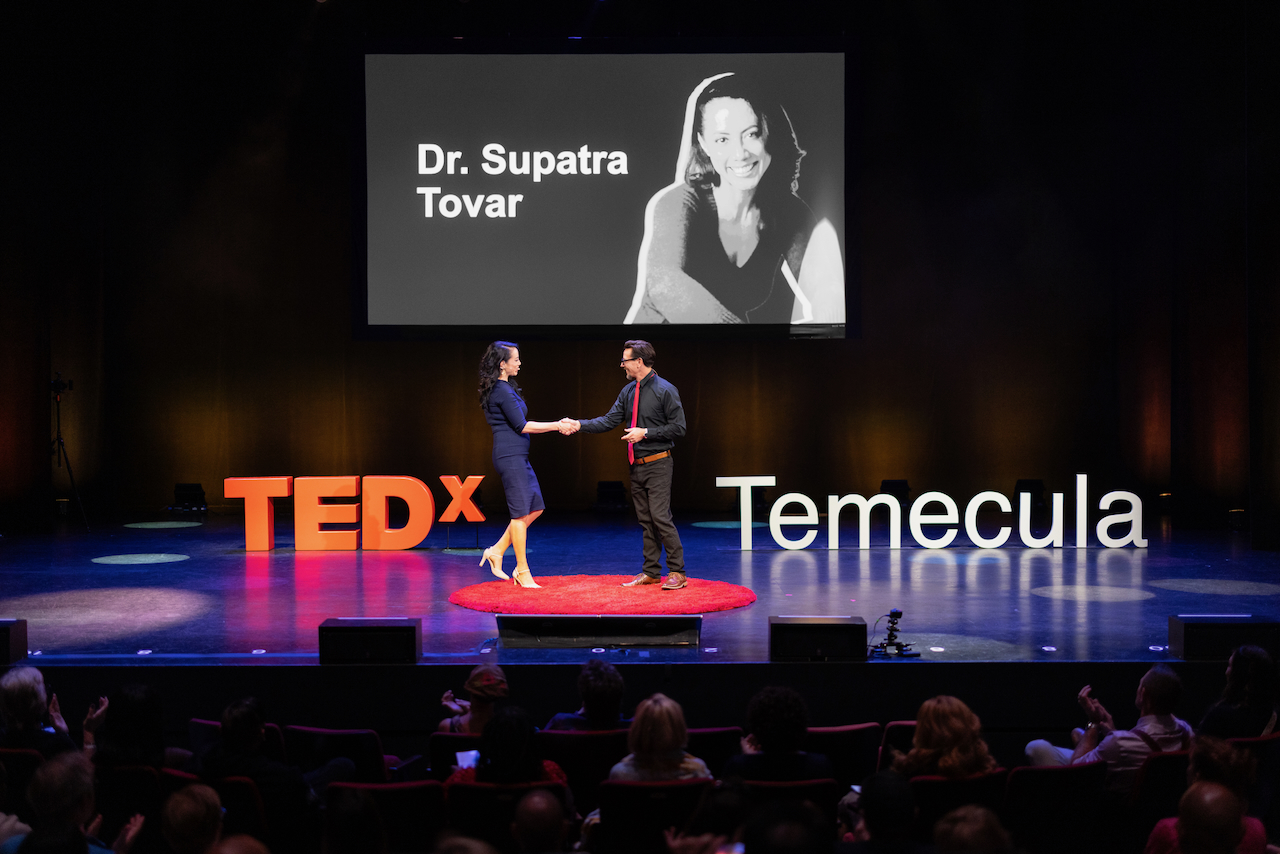
 This piece is adapted from my TEDx talk, where I explore how diet culture, stress, and the rise of GLP-1 medications are reshaping our relationship with food and our bodies.
You can watch the full TEDx talk here: http://bit.ly/3NVR00W
Read this article on my Substack
Recently, I went home to visit my parents in Boulder, Colorado, and found myself flipping through old photo albums when I made a startling realization: I was a very dirty kid.
Every picture showed me covered in dirt, wrestling friends, capturing caterpillars, carving pumpkins, or barreling down my (what I thought was) monstrous driveway slope on my roller skates, ending in a dramatic spin-out finish, pigtails flying.
But I also noticed something more important.
I was a deeply intuitive kid, completely connected to my body, as I would venture to guess you all were as well. I ate when I was hungry, stopped when I was full, happily devoured food I enjoyed, and adamantly refused food I hated (and I am looking at you, overboiled disgusting brussels sprouts! Pew, pew, pew! Sorry mom, but ugh).
Back then, I didn’t know you could have a problem with eating because I listened to my body completely.
It wasn’t until high school, when I witnessed someone close to me struggling with an eating disorder, that I finally began to understand how painful disconnection from the body could be. Watching her swing from bingeing to starvation was horrific. It left a lasting impression and became a frightening puzzle I hoped one day to help solve.
After college, I moved to Los Angeles and was swallowed whole by the entertainment industry—an industry built on appearances, thinness, even emaciation. When an agent looked at my modeling card and told me I needed to lose weight, suddenly, my body became a project to manage.
I stopped trusting it. I started dieting. I lost touch with the intuition I relied on so deeply in my childhood. And while I did work in this industry and was grateful for the experience, dieting kept eating away at my soul.
Even when I became a Pilates instructor and began helping others with their health, I still found myself stuck in that same cycle: dieting, gaining, dieting again, gaining again.
Now objectively, looking back, I know that I was probably not considered fat. But it didn’t matter. I felt fat, and that’s what kept me stuck.
My clients were stuck as well, always chasing an ideal they could never reach. They’d ask for advice I wasn’t qualified to give. That’s when I decided to become a registered dietitian. I went back to school to earn my master’s in nutritional science, and later my doctorate in clinical psychology, so I could better understand and treat eating disorders.
What I learned about Diet Culture—the multi-billion-dollar weight loss industry—changed everything.
I learned how its promotion of two damaging biases—lookism, or the unhealthy pursuit of the thin ideal, and weight stigma, a deeply ingrained and harmful bias—shape not just our beliefs, but our behaviors (Puhl & Heuer, 2009).
Research suggests that weight shame can increase internalized stigma and stress, which may contribute to weight gain over time, creating a toxic, perpetuating cycle (Tomiyama, 2014).
And we often gain that weight by shame eating ultra-processed food, which is designed in ways that strongly influence our brain’s reward systems (Vignola et al., 2021).
Then we are told we need to go on a diet. Today’s trends often promote high animal protein, low carbohydrate diets—recommendations that are often oversimplified or misunderstood. While short-term weight loss can occur, some research suggests that long-term dietary patterns high in animal protein may be associated with kidney and liver strain, cardiovascular risk, and diabetes in some populations (Anjom-Shoae et al., 2024; Delimaris, 2013).
In addition, our overconsumption contributes disproportionately to greenhouse gas emissions and the deforestation of our planet (Popp et al., 2010).
When misinformation clouds our judgment and shame drives our choices, we become disconnected—from our bodies and from the Earth—and more dependent on the very industry that often benefits from our confusion.
And all the while, that industry continues to grow.
Diet Culture is a $170 billion dollar industry and is projected to reach $295 billion by 2032 (Ltd, 2025). It profits by convincing us that we are broken.
And now, we’ve entered a new phase.
With the growing demand for medical solutions for chronic conditions like diabetes and metabolic disease, the pharmaceutical industry has introduced tools that are now intersecting with Diet Culture.
GLP-1 receptor agonists were originally developed to treat Type 2 diabetes by enhancing insulin secretion and stabilizing blood glucose. They have shown remarkable benefits for those with uncontrolled diabetes, with weight loss as a welcomed additional outcome (Fonseca et al., 2019).
While emerging research shows that similar benefits can be achieved through evidence-based nutrition and lifestyle interventions, I fully acknowledge that these medications have been lifesaving for many people, especially those facing significant barriers.
But something very troubling is unfolding.
What began as a groundbreaking therapeutic tool is now being swept into a culture still deeply preoccupied with thinness. These medications are increasingly being absorbed into a system that treats rapid weight loss as a solution.
Please understand, I am not here to blame or shame anyone choosing these medications. Everyone has deeply personal reasons, and I respect those decisions.
However, I am concerned.
Clinicians and treatment centers are reporting growing concerns about disordered eating patterns and increased eating disorder risk in some populations drawn to these drugs for rapid weight loss.
A recent study found that GLP-1 medications are significantly associated with patterns of misuse, including abuse, unprescribed use, and intentional misapplication (Chiappini et al., 2023).
There has also been an unprecedented rise in eating disorders linked to these medications. Melissa Spann of the eating disorder treatment center Monte Nido has said, “nothing compares to the phenomenon that we’re seeing right now with these GLP-1s” (Szabo, Kopf, & Syal, 2024).
We may be entering a concerning territory where suppressing hunger is marketed as empowerment, and clinical intervention is offered not for health, but for thinness.
So what is the cost of silencing hunger for the sake of aesthetics?
GLP-1 medications alter appetite signaling and create a sensation of fullness earlier in the eating process. This is not entirely different from calorie-controlled dieting—except without the same level of hunger.
But the cost extends beyond appetite.
Common side effects include nausea, vomiting, diarrhea, constipation, and fatigue, with more serious complications such as gallbladder issues, pancreatitis, intestinal blockages, possible vision loss, and thyroid tumors (Filippatos et al., 2014).
And we still don’t fully understand the long-term effects, especially in vulnerable populations like children, adolescents, or individuals with a history of eating disorders.
Like diets, when people discontinue these medications—whether due to cost, insurance changes, or other barriers—the weight often returns.
These drugs mimic hormones our bodies already produce, yet we are told we may need them for life.
This raises a deeper question:
Have we become so conditioned to seek external solutions that we’ve stopped exploring what our bodies are capable of on their own?
I worry about the physical, emotional, financial, and social costs—especially when our pursuit of thinness overshadows our pursuit of health.
For me, this reflects a re-emergence of diet culture dynamics in a more medicalized form.
We can never win with an industry whose profits depend on our body’s failure.
But we can reclaim our bodies.
I educate my clients—those on medications, those transitioning off, and those seeking alternatives—on evidence-based strategies that support the body’s natural regulation.
Simple shifts can make a difference:
Aligning with your circadian rhythm by getting morning light, eating earlier in the day, reducing late-night eating, focusing on fiber-rich whole foods, staying active, and prioritizing sleep can all support hormonal balance (Panda, 2018; Qin et al., 2021).
But it’s not just about what we eat. It’s about how we eat.
When we slow down, honor hunger, respect fullness, and eat with attunement rather than judgment, something remarkable happens.
We begin to reconnect with the body’s innate wisdom.
And this matters.
Evolution has hardwired our bodies to protect us from deprivation. When we restrict—whether through dieting or medication—the body can shift into survival mode, conserving energy and making long-term weight loss difficult (Dulloo et al., 2012).
While weight loss may occur temporarily, many people experience weight regain after restriction ends.
But when we listen—to our hunger, our fullness, our emotional signals—healthier and more sustainable patterns become possible.
Our bodies begin to speak again.
They might say:
I’m overwhelmed.
I need rest.
I’m not hungry—I’m lonely.
Or yes, I am hungry—and I need nourishment.
That voice was never gone.
It was just drowned out.
But we can find it again.
It involves three steps:
Descend. Discover. Connect.
Descend into your body.
Discover what is present with curiosity.
Connect to your body’s wisdom.
That’s how trust begins—one moment, one choice at a time.
When we listen, our bodies respond.
And when we reconnect, everything begins to shift.
This isn’t just about food.
It’s about remembering who we are beneath the conditioning.
We were never broken.
We never needed fixing.
We only need to remember how to listen.
References
Anjom-Shoae, J., Feinle-Bisset, C., & Horowitz, M. (2024). Impacts of dietary animal and plant protein on weight and glycemic control in health, obesity and type 2 diabetes: friend or foe? Frontiers in Endocrinology, 15, 1412182. https://doi.org/10.3389/fendo.2024.1412182
Delimaris, I. (2013). Adverse Effects Associated with Protein Intake above the Recommended Dietary Allowance for Adults. ISRN Nutrition, 2013, 1–6. https://doi.org/10.5402/2013/126929
Dulloo, A. G., et al. How Dieting Makes Some Fatter: From a Perspective of Human Body Composition Autoregulation. Proceedings of the Nutrition Society, vol. 71, no. 3, 2012, pp. 379–89, https://doi.org/10.1017/S0029665112000225
Fonseca, Vivian A, et al. Reductions in Insulin Resistance Are Mediated Primarily via Weight Loss in Subjects With Type 2 Diabetes on Semaglutide. The Journal of Clinical Endocrinology & Metabolism, vol. 104, no. 9, Sept. 2019, pp. 4078–86, https://doi.org/10.1210/jc.2018-02685
Filippatos, Theodosios D., et al. Adverse Effects of GLP-1 Receptor Agonists. The Review of Diabetic Studies, vol. 11, nos. 3–4, 2014, pp. 202–30, https://doi.org/10.1900/RDS.2014.11.202
Ltd, C. M. I. P. (2025, July 14). Weight Loss and Obesity Management Market Forecast, 2025-2032. Coherent Market Insights. https://www.coherentmarketinsights.com/market-insight/weight-loss-and-obesity-management-market-3448
Panda, Satchin. The Circadian Code: Lose Weight, Supercharge Your Energy and Sleep Well Every Night. Ebury Digital, 2018.
Popp, A., Lotze-Campen, H., & Bodirsky, B. (2010). Food consumption, diet shifts and associated non-CO2 greenhouse gases from agricultural production. Global Environmental Change, 20(3), 451–462. https://doi.org/10.1016/j.gloenvcha.2010.02.001
Puhl, R. M., & Heuer, C. A. (2009). The Stigma of Obesity: A Review and Update. Obesity, 17(5), 941–964. https://doi.org/10.1038/oby.2008.636
Qin, W., Ying, W., Hamaker, B., & Zhang, G. (2021). Slow digestion‐oriented dietary strategy to sustain the secretion of GLP‐1 for improved glucose homeostasis. Comprehensive Reviews in Food Science and Food Safety, 20(5), 5173–5196. https://doi.org/10.1111/1541-4337.12808
Szabo, L., Kopf, M., & Syal, A. (2024, July 31). Eating disorders rise amid popular weight loss medications Wegovy and Zepbound—Is there a link? NBC News. https://www.nbcnews.com/health/mental-health/eating-disorders-increase-weight-loss-drugs-wegovy-zepbound-rcna162124
Tomiyama, A. J. (2014). Weight stigma is stressful. A review of evidence for the Cyclic Obesity/Weight-Based Stigma model. Appetite, 82, 8–15. https://doi.org/10.1016/j.appet.2014.06.108
Vignola, E. F., Nazmi, A., & Freudenberg, N. (2021). What Makes Ultra-Processed Food Appealing? A critical scan and conceptual model. World Nutrition, 12(4), 136–175. https://doi.org/10.26596/wn.202112483-135
Recent Comments