What does it mean to truly heal from the inside out? On this episode of the ANEW Insight Podcast, I sat down with Coloma Muro psychotherapist, researcher, author of Raw and Unmasked, and women’s empowerment coach to explore the intersection of neuroscience, mindfulness, and self-love. Recognized by New York Weekly Magazine as one of the Top 20 Inspiring Women, Coloma brings over 12 years of clinical and coaching experience, blending psychology, primatology, neuroscience, and Eastern philosophy into a holistic framework for sustainable healing.
A Journey from Barcelona to Bali
Coloma’s story begins in Barcelona, where her fascination with the human mind led her to study psychology and neuroscience. Yet, despite her academic success, she felt an inner restlessness. That drive eventually took her across the world to Bali, where she immersed herself in yoga, Eastern medicine, and spiritual traditions.
Her path wasn’t without challenges an accident in Bali left her unable to walk for months. What might have been a devastating setback became, for Coloma, an initiation into deeper mindfulness. Forced to slow down, she finally integrated years of study into lived practice. As she shared:
“The message of the accident was to slow down. That’s what mindfulness truly is learning to be present, even when life forces us to pause.”
This experience became the foundation for her philosophy: inner healing requires both compassion for our nervous system and intentional slowing down to create space for transformation.
The Power of Neuroplasticity
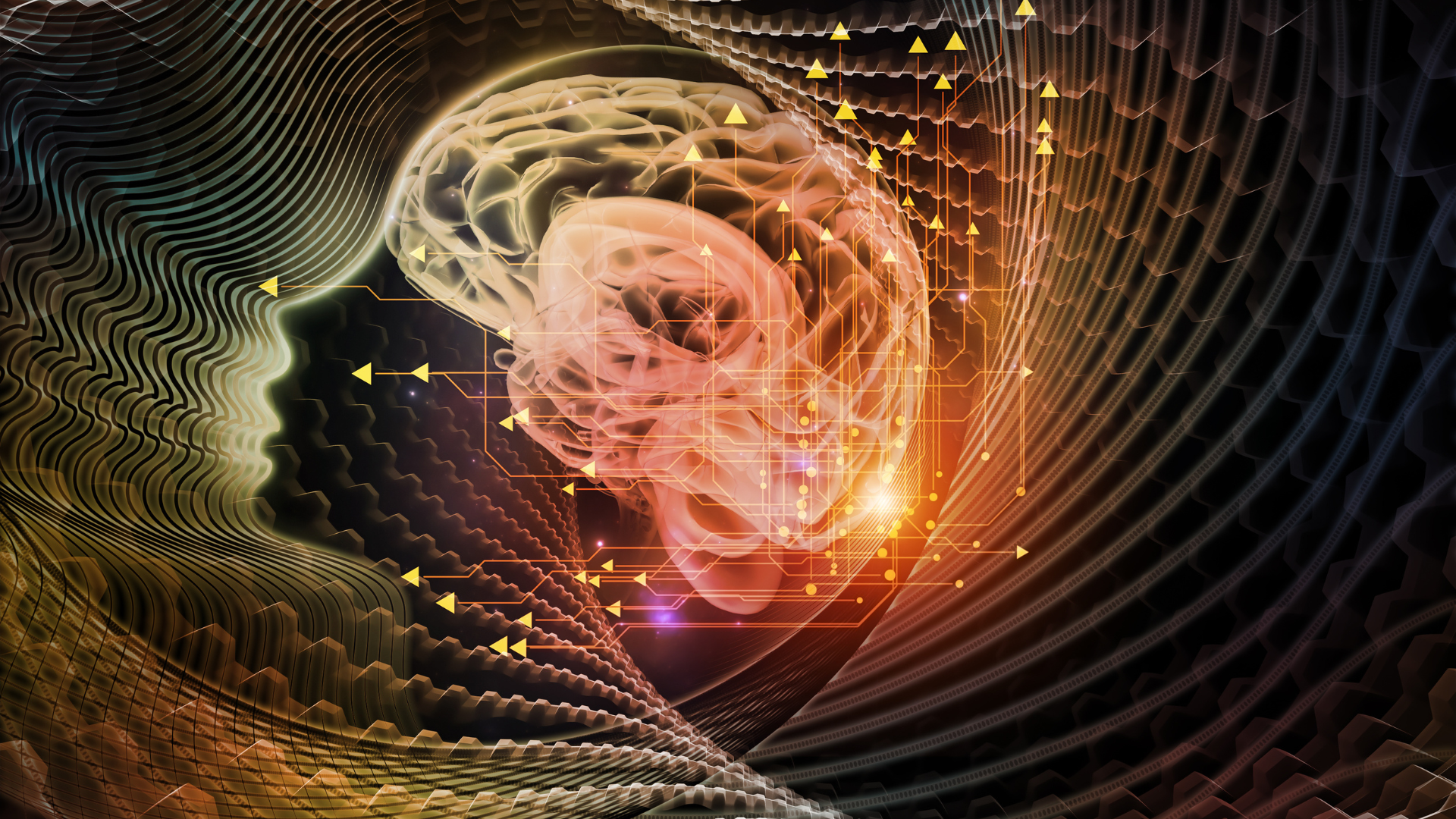
One of the most compelling parts of our conversation was Coloma’s explanation of neuroplasticity—the brain’s ability to rewire itself. Contrary to outdated science, we now know the brain is capable of forming new neural connections throughout life.
According to Coloma, this means we have the power to break free from old survival-based patterns and consciously create healthier ones:
- Mindfulness and meditation calm the amygdala, reducing overactive stress responses.
- Gratitude and self-compassion practices strengthen neural pathways that support emotional regulation.
- Learning new skills stimulates brain growth and rewires circuits for resilience.
- Integrating suppressed emotions builds safety and trust within ourselves, allowing us to respond with curiosity instead of reactivity.
She compares it to parenting: when a child cries, a grounded parent approaches with love and curiosity rather than trying to silence them. Similarly, when our bodies or minds send distress signals, healing begins when we meet them with compassion rather than judgment.
Mindfulness, Bodyfulness, and Energy
Beyond mindfulness, Coloma introduces the concept of bodyfulness a practice of tuning into the space within our own bodies and the energetic field between ourselves and the world. She explains that raising our energetic frequency not only impacts our emotional state but can also open pathways for physical healing.
I shared with Coloma stories of people who used laughter or positive thoughts to recover from severe illness or injury. While skeptics may dismiss these as “woo woo,” both neuroscience and clinical evidence suggest that mindset can dramatically shape outcomes.
As Coloma explains:
“When we cultivate mindfulness and bodyfulness, we take responsibility for our energetic frequency. We can connect to our truth from a raw, honest space and show up in alignment with who we want to be.”
Intimacy Within: The Core of Healing
At the heart of her book Raw and Unmasked lies the concept of Intimacy Within. For Coloma, intimacy isn’t just about relationships with others—it begins with ourselves. Healing requires us to reconnect with our truth, to love our pain, and to treat every part of who we are with sacredness.
She emphasizes:
- Intimacy with self means honoring our wounds rather than abandoning them.
- When we love our own pain, we are better able to love others in theirs.
- Building conscious relationships starts with cultivating self-trust, setting boundaries, and protecting our truth.
As she beautifully puts it:
“When you realize that you are the source of your own pleasure, you don’t abandon it. You want to share your truth. That’s where intimacy begins.”
A Needed Message for Our Times
In closing, I reflected on how powerful Coloma’s message is in today’s divided world. If we each practiced greater respect for ourselves and one another, recognizing our deep interconnectedness, the collective environment we live in could shift dramatically.
This conversation was just the beginning. In the second half of our interview, Coloma dives even deeper into healing, empowerment, and practical ways to integrate mindfulness and bodyfulness into daily life.
🎧 Listen to the full conversation on the ANEW Insight Podcast
📺 Watch on YouTube: @my.anew.insight
📘 Read Coloma’s book: Raw and Unmasked
Here are her social media channels: https://www.instagram.com/mindfulnesslovetherapist/?hl=en , https://www.linkedin.com/in/colomamuro?trk=public_post_feed-actor-name, https://www.colomamuro.com/about, https://www.amazon.com/Coloma-Muro-Carceller/e/B0DGWGL52S/ref=zg_bsnr_g_4672_d_sccl_14_bl/000-0000000-0000000
💻 Explore more at anew-insight.com
View here full podcast Transcript here:
Dr.Supatra Tovar: [00:00:00] Hello, and welcome to the ANEW Insight podcast. I am Dr. Supatra Tovar, and I am so excited to have author, psychotherapist, researcher, and women’s empowerment coach Coloma Muro with us today, Coloma welcome.
Coloma Muro: Thank you, Supatra. I’m so happy to be here.
Dr.Supatra Tovar: I am so excited to interview Coloma. She has such an interesting background, so let’s get right into it. I’m gonna read a little bit about Coloma and then we’re gonna start our questions. Coloma Muro is a psychotherapist, researcher and women’s empowerment coach with over 12 years of experience. She holds a degree in psychology from the Autonomous University of Barcelona and a double
Dr.Supatra Tovar: masters in research in neuroscience and primatology. Her holistic approach integrates psychology, neuroscience, mindfulness, and [00:01:00] spirituality to promote sustainable inner healing. Coloma emphasizes brain health and neuroplasticity guiding clients to rewire mental patterns for emotional regulation and personal fulfillment.
Dr.Supatra Tovar: She is the author of Raw and Unmasked, a book offering strategies to reprogram the nervous system, reconnect with the body, and adopt new narratives to access abundance, joy, and personal freedom. Through her work Coloma introduces the concept of intimacy within as essential for nurturing, fulfilling connections with oneself.
Dr.Supatra Tovar: She was recently recognized as one of the top 20 Inspiring Women by New York Weekly Magazine. Coloma welcome.
Coloma Muro: Thank you. Thank you for this amazing introduction.
Dr.Supatra Tovar: Well, you’re an amazing woman and you really caught my eye and I find you to be inspirational. [00:02:00] So help our, audience be inspired by you. What led you to pursue your academic studies? They are vast, they are varied. And how do you combine your background in neuroscience with mindfulness practices in your coaching methods?
Coloma Muro: Well, I was always fascinated by nature as a child, from an animals to astronomy. I was inclined to study general medicine to understand how the human body worked, but my interest in the brain and how humans make decisions pulled me towards psychology. And I was very passionate about the biology of the brain and understanding the physiology behind our behaviors. And at some point, uh, during my studies, I started learning about mindfulness and that led me to study or to pursue neuroscience. And the more I learned about consciousness, [00:03:00] the more intrigued I became. And my brain though, was very, was too immature to integrate everything I was studying though. And part of what I learned through my own experience actually, is that we need. have the capacity to, to receive that information. And back then, , I was too busy. I had never stopped. I was this high achiever. I was, my curiosity was moving faster than my cognition or than the capacity that I had to integrate the information that I was studying. In any case, I, I did work in amazing places from, uh, hospitals to research centers, to rehab centers, and those were deeply gratifying. But I still had a, a surge or like a desire to expand my knowledge in ways that the way I [00:04:00] was living was not, I was not finding, if that makes sense, and to the point that I felt called to relocate to Bali. So
Dr.Supatra Tovar: Hmm.
Coloma Muro: to learn Eastern medicine and philosophy. And I am still to this day, blessed by all the support that I received by my parents, my friends, my coworkers.
Coloma Muro: But I did leave everything, I had my apartment my dog, the life I had in Barcelona, which is originally my hometown. And I embarked on a one way ticket, uh, to Southeast Asia. And there I studied yoga and, uh, I learned a lot of different things. coming back to your question, the lesson for me from all my studies, uh, was to, to slow down.
Coloma Muro: And I got this lesson from an accident that I had in Bali. I [00:05:00] got my foot injured and I was told that I would never be able to walk again and obviously forget about yoga or any physical activities at all. But I’m bringing this up because that was part of my teaching. The universe gave me the opportunity to, to stay in bed for three months in a foreign country where nobody would speak English.
Coloma Muro: And this is where after years of studying mindfulness, I got to understand what that practice actually truly meant. And I had the space to integrate what the information that I had been receiving prior to my travel. The message of the accident was to slow down, which is a part of like what mindful living is. And I could connect deeper, I could see with more clarity, and I could enjoy more regardless of the circumstances. [00:06:00] What I teach my clients when I teach them to heal from the inside out, part of it comes from my own personal journey. I help people understand the neuroscience behind their tendencies so they can look at themselves with more compassion, and then I guide them to create a life that aligns with who they want to be.
Coloma Muro: But for us to do so, we must take a step back uh, slow down and take intentional and committed actions. Those require mindfulness. We must be aware of our internal processes, not attaching to them or ignoring them in a, in a, in a way, we must be proactive in the process of being passive. So in other words, consciously being with ourselves [00:07:00] without letting our thoughts or emotions dictate our behaviors. We can rather them and show up in an aligned way. And this way of living includes mindfulness, as I said, and also body fullness, which is a practice that I’m sure we can dive deeper into that later. But it’s feeling the space within ourselves and between us and the rest of the world. And that’s why I mentioned that I didn’t have the capacity to receive the information when I was studying so many different modalities of healing and neuroscience and, and psychology. In this space is where magic happens is where we can create resonance, where we feel connected one another without emmeshing. With the other. So
Dr.Supatra Tovar: I love this.
Coloma Muro: if you want me to going, [00:08:00] but.
Dr.Supatra Tovar: Oh my gosh. I love this because, you know, I, anybody who knows me, I’m one of the biggest proponents of mindfulness. Body fullness is a, is a new term to me. But I also think, uh, you know, the mind and the body are one, we’re not separate from mind and body. Though we do receive a lot of signals from the body up and from the mind down.
Dr.Supatra Tovar: And I am really fascinated that you use mindfulness to help you heal. And I want you to just, if you can try to explain it, you might not even be able to, but how does being mindful put you in a better state for healing?
Coloma Muro: There is a new level of connection when you live mindfulness, rightfully, there is freedom in the connection. This is related to the non-attachment, one of the principles of [00:09:00] mindfulness. The same way we don’t identify with our own thoughts, we are not responsible for others people’s, uh, emotions or behaviors. When we cultivate mindfulness and body fullness, we take responsibility for, our energetic frequency for our own thoughts, behaviors, where we invest our energy in, what we pay attention to. We are attentive to the electromagnetic field that, uh, around us
Dr.Supatra Tovar: Mm-hmm.
Coloma Muro: We attract as we vibrate, we attract. So maybe to clarify what I’m saying we can connect to our truth from a more clear raw space, and access deeper levels of consciousness and connect with others [00:10:00] from this, uh, more pure space. And I, this is, uh, at the core of the healing journey. To be truthful, to be honest, to accept ourselves fully so we can yeah, we can make choices that are in alignment with who we wanna be, how we wanna show up as,
Coloma Muro: don’t
Dr.Supatra Tovar: Yes,
Coloma Muro: there’s more or.
Dr.Supatra Tovar: I think it does, and I think that when we raise our energetic frequency and we’re not living in the kind of, uh, mire or the muck of lower energy frequencies, that actually opens up more healing pathways in our body. We’re not constricting our energy. And I know that that sounds real woo wooo to some people out there, but there are copious amounts of evidence of people healing themselves just by raising their energetic frequency.
Dr.Supatra Tovar: Like there’s a story of a man who had a terminal cancer diagnosis, and what he did was he put himself in [00:11:00] a room and all he did for weeks on end was watch comedy movies. That’s all he did,
Coloma Muro: Mm-hmm.
Dr.Supatra Tovar: And his cancer went into remission. Which is unexplainable. And a lot of people are like, ah, yeah, you know, they may poo poo that.
Dr.Supatra Tovar: But I just had somebody on my podcast yesterday who had such a traumatic brain injury that they expected him to be a vegetable after his injury. And he said that he never let anything but positive thoughts go into his mind after that occurrence. And that occurrence was uh, atrocious and so traumatic.
Dr.Supatra Tovar: And so I think that there is so much power in our mindset, and that’s why I wanted you to be on today. And I really want to have you illuminate to our audience a little bit more about neuroplasticity. How can you explain, how neuroplasticity can empower individuals [00:12:00] to change their mental patterns
Dr.Supatra Tovar: and their behavior? So this is what we’re talking about. You could have gone into a negative state with this injury, but you didn’t. You chose to be mindful, which opens you up to this open-hearted, non-judgmental awareness of the present moment, and that facilitated a stress free environment that led to your healing.
Dr.Supatra Tovar: So give us a picture of neuroplasticity for anybody who doesn’t really fully understand what that means.
Coloma Muro: Okay. So neuroplasticity is the brain’s ability to reorganize itself. By forming neo neural connections and understanding, neuroplasticity, as you said, empowers individuals to rewire their brains for greater resilience, emotional balance, and personal transformation. And before explaining in what ways we can harness neuroplasticity for positive change, I want that we all understand, the wisdom of our bodies, which [00:13:00] you already kind of were talking about. Our physical body the home within which our brain resides. And as such, it provides an anchor to who we are and how we move about in the world. And the body is connected to the brain via nerve fibers, which allow efficient integration, uh, of sensation, emotion, cognition, and, and action. And our, an organism receives sensory input, contextualizes it emotional and cognitive information, and, uh, affects an appropriate response.
Coloma Muro: That would be, uh, and body wisdom, uh, two concepts that that’s important to understand for us to, to use it. To create positive impact or to create health. we come to this [00:14:00] world with a somatic map that is developed way before birth. Uh, If the mother is stressed, we know that maternal anxiety I mean can shorten like, uh, the length of baby telomeres, are protective caps of on chromosomes and are involved in cancer development, for example.
Coloma Muro: Or we know that when. mother’s, uh, elevated cortisol, which is the stress hormone, can lead to neurodevelopmental disorders in the child. So this is transgenerational, meaning it passes from one generation, uh, to the next. And this map that we carry within our bodies contains the cues that we use even before our commission develops the function in our environment. Then after birth, we also receive information about who we need to be, uh, for the first, during the first years of our lives. To safe and loved. So prior to our birth and during the [00:15:00] first years of our lives, our bodies contained instructions, so to speak, on how to move through life. Now, What happens is that when we leave paying attention to our map, uh, we are somewhat disconnected from the present, and I’m gonna come back to, to your question, but there is encoded information that served us in the past, but for us to fully connect to reality and create our life, we must understand that the map that was offered that, or that offered a sense of safety doesn’t serve us anymore. And when we understand that our brains and bodies have stories that kept us safe and we choose to see them just as a stories, then we can choose how we wanna live our lives in the now. We access freedom when we choose to be with the [00:16:00] territory. Instead of holding onto the conditioning or the map that is not serving us. And from, from this moment we not only do we create freedom, we’re taking responsibility for our healing. And I don’t know how, how deep you want that I go
Dr.Supatra Tovar: Go deep.
Coloma Muro: Uh, at, at the, at the end of the day it’s all about learning. That one thing is our programming and one thing is who we want to be. And there’s, there’s is where we can get to choose who we wanna be. There’s where that is, where healing happens in the present. And how we approach healing is the same as you would I, I’m gonna, hmm. use a metaphor if you, uh, if your child is crying and you are in a grounded space, showing love to that [00:17:00] child would be to approach the child with curiosity to understand what they need rather than trying to keep them quiet. So if we are stressed, if our bodies and brains are wired in a way that are in hyper, hyper alert when we have pain or when we have thoughts or emotions that are uncomfortable, we wanna get rid of them because we don’t have a space, we don’t have capacity to deal with them. Whereas if if we approach our own thoughts, our own emotions, our own sensations, with love, with curiosity, the same way that we would approach a child that is crying, this is when we with compassion we can embrace the child, we can see our thoughts, our stories, uh, as they are just the stories that, you know, we carry from our past and we can choose to yeah, make space for them [00:18:00] and choose how we wanna respond to them. And all of this is mindfulness, but it includes neuroplasticity and how to access personal freedom.
Coloma Muro: How to take responsibility for how we wanna show up. So everything is interconnected, but at the core pausing, creating a state of calm within ourselves, listening to our bodies. It’s all part of what fosters neuroplasticity. And we know that mindfulness and meditation, for example, strengthen neural pathways related to present moment awareness.
Coloma Muro: Uh, reducing overactivity in, in the amygdala, for example. And they also increase, prefrontal uh, cortex functions, improving emotional regulation and decision making. So we. We know that simple practices as I said, mindfulness are also gratitude, practicing gratitude, self-compassion, [00:19:00] or positive affirmations, as you were saying,
Dr.Supatra Tovar: Learning something new.
Coloma Muro: Learning something new.
Coloma Muro: All of these strengthen neural circuits related to inner strength, and over time this rewiring helps the brain default to a healthier to healthier emotional states rather than stress or fear. Additionally, integrating suppressed emotions rewires the brain for
Dr.Supatra Tovar: Yes.
Coloma Muro: emotional safety, self-acceptance and practices like guided visualizations, uh, or emotional release techniques.
Coloma Muro: Uh, create new neural pathways for self-love and empowerment
Dr.Supatra Tovar: Yes. I love that. And, and just to, to make it as simple as possible for people. Neuroplasticity is essentially a rewiring of the brain and old science used to purport that once we reached a certain age, [00:20:00] there was no way to change the brain. And all new research is showing that that’s not true. And you can see this just on a visceral level.
Dr.Supatra Tovar: Say you have an accident, uh, and you break your foot, uh, you could have created new neural pathways that I only feel pain. I am traumatized. I am never going to recover. That would be one way to rewire your brain, and you can also, on the flip side, rewire your brain to I am absolutely 100% going to heal.
Dr.Supatra Tovar: I am actually gonna be stronger after I recover from this injury. So a lot of people, you know may argue that our mind does not determine our outcome or, or what happens with our, within our bodies. And I think it is absolute falsehood. Our minds are, are incredibly [00:21:00] powerful and what we think, we create, and I think really fully understanding that in the audience out there is so
Dr.Supatra Tovar: vital because that’s empowering. That actually shows that you have the strength within you, just through the power of thought to change an outcome, and that is absolutely the most powerful idea that you can adopt and incorporate in your life, in my opinion. So I am so glad we’re like twin spirits. So excited.
Dr.Supatra Tovar: So tell me before the end of this half of this episode, we only have a, a little bit of time left, but give the concept of Intimacy Within that you introduce in your book, Raw and Unmasked. What is that concept? Explain that us and then we’ll probably have, continue the conversation in the half.
Coloma Muro: [00:22:00] It has to do with the thing that I am most fascinated by and committed to, which is through love. I believe this force is within all of us and throughout life we learn to block it. Our wounds become so deep that we disconnect from source, and then we, the more we operate from our wounds, the more we abandon our true selves, which translates into more layers of pain. And to be intimate with something is to share truth. It is to be exquisitely connected, to be devoted, to protect our truth. And romantic partnerships, for example, intimacy, is co-created when we share ourselves fully with one another, when we let love in, when we are open, honest, vulnerable. And so my work revolves around becoming intimate with self. When you realize that you are the source of your own, uh, pleasure, you just wanna share your truth, not to abandon it. It, it’s, it’s so pleasurable to be yourself [00:23:00] that you generally wanna share yourself with others. And this. As I said earlier, uh, when you love your own pain, you can also love another person’s pain, and this is how we create conscious relationships and heal through them.
Coloma Muro: When we commit to becoming available to ourselves, we can meet another from these raw and magnificent unconditional love. So cultivating intimacy within means to treat everything that we are with sacredness.
Dr.Supatra Tovar: Hmm.
Coloma Muro: Yeah, it’s the same way, way we build intimacy with another by being nonjudgmental, not projecting, and rather listening and creating a safe space for our lover’s full expression.
Coloma Muro: We can do so for ourselves, and this also entails setting boundaries. We don’t want our romantic partners to be. Verbally abusive or to disrespect us. So the developing [00:24:00] intimacy within involves setting boundaries for ourselves, both cognitive, like no negative self-talk you were mentioning, and also somatic boundaries, for example, to be in environments that are conducive
Coloma Muro: to our growth and for this process, we must, uh, develop both mindful awareness and body fullness. By learning how our bodies respond to other people’s energies, we can choose more intentionally, who we share our energy with.
Dr.Supatra Tovar: I love this. Coloma, we’re gonna have to stop for this half, but I really wanna get back into this, and I just wanna say before we end this half of this episode, oh my gosh in these times, in this political climate that we’re living in, if we could all just recognize that we’re interconnected and that we should not only respect ourselves, but we should respect
Dr.Supatra Tovar: others and care for others, [00:25:00] it would be a very different environment that we’re living in right now. So you guys, oh my gosh, you’ve gotta come back for the second half. Coloma’s amazing and I really feel deeply connected to her even though this is the first time we are meeting. Her message is absolutely necessary in this time and her pathway to
Dr.Supatra Tovar: healing can also be your pathway to healing. So please tune in next time for the second of this amazing episode with author, psychotherapist, researcher, and women’s
Dr.Supatra Tovar: empowerment coach Coloma Muro. Coloma, thank you so much.
Coloma Muro: Thank you
Coloma Muro: Supatra.
Recent Comments