What we eat is no longer driven purely by hunger, taste, or health knowledge. Social media, digital marketing, body imagery, and AI algorithms quietly influence what we crave, how we judge our bodies, and which “health trends” we follow. The modern food environment programs us emotionally and psychologically — long before we ever step into the kitchen.
Meet Dr. Tatyana El-Kour: The Global Researcher Studying How Media Shapes Eating Behavior
Credentials & Experience
- Senior Psychology Research Fellow – Media Psychology Research Center
- Registered Dietitian Nutritionist
- Over 25 years researching:
- Media nutrition messaging
- Cultural eating narratives
- Consumer behavior psychology
- Author of 100+ peer-reviewed publications
- Presenter of 500+ workshops worldwide
Dr. El-Kour’s work bridges nutritional science, behavioral psychology, and digital media to reveal how global messaging impacts everyday health decisions.
Food Is Story: How Narrative and Culture Drive What We Eat
Food Is Never Just Food
Eating is not a simple biological process. Food choices are shaped by identity, tradition, social cues, and emotional meaning — not just nutrients or calorie counts.
Global Cultural Examples
- Jordan: Olive oil symbolizes heritage and health, yet Western low-fat messaging labels it as something to avoid.
- Japan: Rainbow bento lunches promote balance through beauty, variety, and enjoyment — not restriction.
- Mexico: Tortilla sharing models encourage moderation rather than elimination.
Cultural respect determines whether health advice is embraced or rejected.
The Health Halo Effect: Why Processed Foods Look Healthier Than They Are
When Labels Rewrite Reality
- “Gluten-free” gummies replacing whole fruit
- Protein bars marketed as complete meals
- Low-fat claims hiding high sugar levels
The health halo effect causes consumers to overestimate health benefits based on marketing labels rather than true nutritional quality.
How Idealized Bodies on Screens Fuel Disordered Eating
The Body Ideal Trap
Constant exposure to unrealistic body standards:
- Increases meal skipping
- Creates chronic dissatisfaction
- Triggers orthorexia and restrictive eating behaviors
Research Insight
Media images correlate with higher rates of:
- Body checking
- Perfectionistic food rules
- Diet cycling behaviors
When “Wellness Trends” Strip Science of Cultural Wisdom
Diet Culture vs. Cultural Wisdom
-
- Low-fat dieting clashes with Mediterranean olive oil traditions.
- Low-carb diets conflict with cultures where grains and rice symbolize nourishment and family gathering.
- Intermittent fasting trends strip sacred fasting rituals of meaning and recast them as viral weight-loss hacks.
Health Reality Check
- Eating in windows under eight hours daily has been associated with increased cardiovascular risk.
- Extreme fasting is not equivalent to circadian-aligned time-restricted eating supported by metabolic research.
Why the Protein Explosion Is Driven More by Marketing Than Medicine
Who Is Being Targeted?
- Perimenopausal and menopausal women
- Fitness and longevity communities
- Weight-loss consumers
Health Risks of Excessive Animal Protein
- Higher cardiovascular disease risk
- Reduced longevity markers
- Environmental sustainability concerns
Protein marketing thrives on fear — not true nutritional need — while ignoring balanced dietary patterns.
Precision Harm: How Algorithms Lock You into Food Extremes
How AI Predicts and Programs Habits
- Click fasting content → endless fasting videos
- Watch carb-avoidance reels → demonization of bread and rice
- Pause eating challenges → normalization of binge tendencies
Why Algorithms Can’t Protect You
AI tracks engagement, not emotional distress — and amplifies extremes:
- Restriction culture loops
- Binge-style entertainment feeds
When Eating Becomes Entertainment Instead of Nourishment
What Digital Food Culture Promotes
-
- Speed-eating contests
- Extreme calorie challenges
- Sensory overload visuals designed for clicks
Psychological Effects
-
- Activates reward pathways without producing satiety
- Distorts normal portion expectations
- Strengthens craving and overeating cycles
Why Teens Are Especially at Risk in the Algorithm Era
Neurological Susceptibility
-
- Developing impulse control
- Emotional rule-based eating tendencies
- Heavy peer and social influence
What Protects Young Minds
- Strong cultural grounding
- Media literacy education
- Open family conversations
- Positive adult modeling
Want to Know more about the Guest Dr. Tatyana El-Kour here are her social media links https://www.instagram.com/tatyanaelkour/ , https://www.facebook.com/tatyana.elkour, https://x.com/tatyanaelkour , https://www.youtube.com/channel/UC7EU2bkPx_mN7fkAAgBf2UQ , https://www.linkedin.com/in/tatyanaelkour/
Frequently Asked Questions
- What is the Health Halo Effect?
Food marketing that makes processed products appear healthy due to labels rather than true nutrition quality.
- Does intermittent fasting increase health risks?
Short fasting windows under eight hours daily may raise cardiovascular risk — especially when used for weight control rather than circadian support. - How does AI influence eating behavior?
Algorithms customize content feeds that reinforce extreme food narratives: restriction or binge normalization. - Why is protein suddenly everywhere?
Consumer marketing and fear-based diet narratives—not biological necessity—drive excessive protein promotion.
- How can teens resist diet culture content?
Through media literacy, cultural grounding, open emotional discussion, and adult role modeling.
Continue Your Healing Journey
- Course: Deprogram Diet Culture — science-based, trauma-informed healing
➡️ anew-insight.com - Read the full framework
- Book: Deprogram Diet Culture (print, Kindle, Audible)
- Listen to the ANEW Insight Podcast Weekly conversations on psychology, nutrition, trauma, embodiment, and real healing.
View here the full podcast Transcript:
[00:00:00]
dr–supatra-tovar_1_09-10-2025_110408: Hello and welcome. I am so honored to have senior Psychology research fellow and fellow registered dietician nutritionist, Dr. Tatyana El-Kour with us today, Dr. El-Kour, welcome to my podcast.
dr-tatyana-el-kour_1_09-10-2025_210408: Thank you very much Dr. Tovar. I’m really excited to be here with you.
dr–supatra-tovar_1_09-10-2025_110408: Me too. So, uh, Dr. El-Kour and I met at the APA conference, the American Psychological Conference in, uh, Denver. And, uh, she, I was blown away by her presentation and then just learning she’s also a dietician. We’re very rare, uh, in our field to be psychologists and dieticians. I knew I had to invite her on my podcast. So I’m gonna read a little bit about, uh, Dr. El-Kour, and then we’re gonna get right into the questions. [00:01:00] Dr. Tatyana El-Kour is a senior research fellow at the Media Psychology Research Center and a fellow registered dietician nutritionist with over 25 years of experience examining how media, technology and culture influence eating behaviors and health decisions. This is something I have been very interested in. She has led pioneering global research. Authored more than 100 scholarly publications and delivered over 500 workshops worldwide. Dedicated to bridging science and innovation. El-Kour’s mission is to empower healthier, more informed communities by harnessing the power of media and technology. So you can see why I invited her on this podcast. We really are interested in ways that we can improve our health, and I think that, we’re not as aware of the influences that media [00:02:00] play on us, and that’s why I invited Dr. El-kour. So welcome Dr. El-Kour.
dr-tatyana-el-kour_1_09-10-2025_210408: Thank you very much. I’m humbled by the, by the introduction, and I’m really excited to be here again, I reiterated, thank you very much for inviting me.
dr–supatra-tovar_1_09-10-2025_110408: Absolutely. Is it okay to call you Tatyana moving foward?
dr-tatyana-el-kour_1_09-10-2025_210408: Of course, please do. Yes,
dr–supatra-tovar_1_09-10-2025_110408: Okay. Okay. It’s less of a mouthful.
dr-tatyana-el-kour_1_09-10-2025_210408: of course.
dr–supatra-tovar_1_09-10-2025_110408: I always start my podcast looking at inspiration, and I really wanna understand what inspired you to dedicate your amazing career to exploring the intersection of media, technology and eating behavior.
dr-tatyana-el-kour_1_09-10-2025_210408: You know, Supatra, from the beginning I saw that food choices are, are never made in isolation. They’re shaped by the stories and cues around us. And growing up between Amman and North America, I noticed how the same drizzle of olive oil was celebrated in heritage with my grandma, but it [00:03:00] was also labeled as fat to avoid in US markets.
And so later I worked on community campaigns where well-meaning messages sometimes backfired, and one urged families to cut oil completely. For example, soon after a mother told me that she’d stopped cooking her favorite meal for her children because she felt judged by the, by the ads. And so we reframed it, you know?
Honor teta spoon or one generous spoon at a time, and teta means grandma in, in, in Arabic. So suddenly pride returns to the kitchen. Children are happy, the mom is happy. So that moment really cemented my path. Food is never just about nutrients. It’s narrative, and media is just part of the meal.
dr–supatra-tovar_1_09-10-2025_110408: Mm absolutely. So give me little bit of a picture of how you went into this kind of research as far as you know, what our messaging is. And messaging is from everywhere. It’s from social [00:04:00] media, it’s from news, it’s from what comes out of the, uh, Academy of Nutrition and Dietetics. So, gimme a picture of how you started to shape your research.
dr-tatyana-el-kour_1_09-10-2025_210408: And one of the first was the health halo. You know, I, walking in the streets of London, I saw parents bypass fresh fruit for gluten-free gummies because the label sounded virtuous. And so I, I worked in, in Nairobi, in Kenya, and children could sing every line, every line of a sugary drink jingle. Before that you could even read a nutrition label.
dr–supatra-tovar_1_09-10-2025_110408: Mm-hmm.
dr-tatyana-el-kour_1_09-10-2025_210408: And, and another was the body ideal effect, you know, in, in Cairo for example, where also I worked quite, uh, a number of years billboards of ultra lean models, you know, didn’t really inspire health. They pushed teens towards skipping meals and, and research confirms that media exposure increases body dissatisfaction and even disordered eating risks.[00:05:00]
But then, you know, with nutrition, diet fads grew that it had more layers. You know, in the nineties we had low fat messaging, which really clashed with olive oil culture like mine. So where fat was, was the heritage, the healthy fat was the heritage. And then you had low carb campaigns where, which clashed even with rice cultures, where rice symbolizes abundance and family as in, uh, central Asia and even south, uh, southern, southeast Asian cultures.
And then. And then lately we had intermittent fasting, which is especially complex. You know, it has deep roots in religious traditions, you know, from Ramadan in Muslim culture to lent to orthodox fasting. And those have embedded meanings to them. But the way it’s being portrayed in modern media, whether it’s online trend or even in, in different supermarket packages, it’s a magic bullet for weight loss, uh, and also for productivity.
So the, the missing piece is nuance. You know, [00:06:00] new research shows us that, you know, people who eat in very short windows, like fewer than eight hours a day, actually have a higher risk of heart disease and. The lesson is, you know, diet trends aren’t inherently good or bad. You know, it’s all about context.
And so what inspired me really is, is the, you know, for example, in the intermittent fasting ritual, ritual, fasting carries wisdom and resilience. While intermittent fasting was really a viral hack, and it can be really risky when you would strip it away from culture and also from science.
dr–supatra-tovar_1_09-10-2025_110408: Oh, absolutely. It’s so interesting. I just had Dr. Satchin Panda on my podcast who basically discovered the light sensing, uh, cell in our eye, melanopsin, and he wrote the Circadian Code and we were talking about this. And I think a lot of his research was actually subsumed into diet culture, and kind [00:07:00] of altered because what he
came, you know, to understand at least about, um, you know, intermittent fasting is that time restricted eating, meaning when you kind of follow your circadian rhythm is beneficial for our metabolism and for our health. it was taken and really taken into an extreme with diet culture by making the fasting windows smaller and smaller and smaller.
And so today you’re seeing people who are following the One Meal A Day diet,
dr-tatyana-el-kour_1_09-10-2025_210408: Yeah.
dr–supatra-tovar_1_09-10-2025_110408: I think is
dr-tatyana-el-kour_1_09-10-2025_210408: Oh.
dr–supatra-tovar_1_09-10-2025_110408: actually. Very harmful, very stressful, and very difficult to sustain. Oh my goodness. So we have so much to unpack here. You know, you gave me a picture of some of the patterns that you noticed and how media shapes our food choices. Do you have an, you know, [00:08:00] expanded view on that? Especially lately, maybe even what we’re seeing with, you know, the proliferation of, um, protein recommendations. That’s what I’m seeing so much of in the media lately that I find disturbing.
dr-tatyana-el-kour_1_09-10-2025_210408: Absolutely. I mean, you see a lot of protein shakes being marketed for premenopausal and menopausal women, and that, you know, the secret is in the protein even for, for, for, for women during, in that age disregarding her culture, where she comes from, and even, uh, basing a relation, a negative relationship to hormones.
You know, hormones are normal. It’s a normal trajectory of a human body, and so. Building that kind of a negative connotation to it is, is something that is, uh, that is prolific and it’s on the media and it’s also being magnified. The other piece, or the other trend I’m seeing is food, pornography, where [00:09:00] you see a lot of, uh, you know, trends.
Even on TikTok work, teens and even youth are just, uh, racing to eat a very large fatty meal or a very large healthy meal in no amount of time. The with, with no respect to any health or even, uh, with no regard to, to your, to your audience or to who watches you. And so, and it becomes a trend and it’s, it’s, it’s skewing the way we look at food portions as a, as an as another example.
And then you have the self-diagnosis pieces with a, with a TikTok, you know, um, if you hear somebody talking about, uh, an anorexia or orthorexia or an eating disorder, and they, they become very interested and they start following to learn more about the tricks of trade and how, how I could do it, how I could get better at anorexia.
And those aspects are really, really, uh, very harmful practices and they’re threatening the way we’re looking at media and nutrition.
dr–supatra-tovar_1_09-10-2025_110408: And I wanna [00:10:00] spend a really great portion on that in the second half of this podcast
dr-tatyana-el-kour_1_09-10-2025_210408: Yeah.
dr–supatra-tovar_1_09-10-2025_110408: for sure. Uh, because that is something that I, you know, deal with all the time with my clients. Uh, that’s a big reason why I wrote my book right there, Deprogram Diet Culture, because what we’re seeing people follow online is very disturbing.
And just back to the protein that I think it’s very scary right now because I think it, you know, all, all of these recommendations are based off of consumerism, um, and industries wanting to make as much money as possible. If you look at like the animal agricultural industry. It’s an unsustainable industry because they’re promoting such high levels of intake. Um, and I think that they’re doing that because they, they know that the resource is, uh, finite. We’re running out of, uh, you know land, arable land that the, uh, cattle can graze, that the livestock can graze. Um, the [00:11:00] prices are going to be rising. So they’re trying to promote, especially animal protein, um, to, with, uh, to levels that I think are really, uh, harmful to our health.
Because when you look at research. You know, consuming too much animal protein leads to all sorts of health complications. Would you agree that it’s more market driven than health driven?
dr-tatyana-el-kour_1_09-10-2025_210408: I mean there, uh, definitely there is a market interest in that, but there is also a people, there is not only the food industry piece, there is also the technology piece, you know, so technology is benefiting from how people behave around. Around the information. So if you are giving them a piece of information, telling them that animal protein is, is actually good for them and that they need to ramp up their intake.
You have AI behind, you know, behind your screens, you know, tracking your behavior, looking. [00:12:00] Targeting your emotions and even predicting how you are going to continuously be exposed and even relate to the message without thinking about it or analyzing it. And then of course there is the other piece where climate,
nutrition at the climate nutrition nexus, where plant-based proteins have been heavily promoted and that you will not be able to eat enough of the proteins from plant sources so you really need the protein powder and you really need the different types of proteins. And that really was completely the opposite of the argument on the animal based protein.
So we are even adding to the confusion of consumers and, and, and I believe the behavior of industry has intertwined with our like own behavior as consumers with technology has really added layers of complexity. So professionals like us as registered dieticians will need, will lean into upskill our ourselves in technology, but [00:13:00] also in understanding the industry behavior around, uh, around such, uh, promotion and such products.
dr–supatra-tovar_1_09-10-2025_110408: And that’s why we need people like you out there doing this kind of research. It’s amazing. So let me ask you this. How do cultural narratives and global differences influence the way people respond to food marketing and health messaging? Gimme a picture outside even of the United States, what’s happening.
dr-tatyana-el-kour_1_09-10-2025_210408: Sure, sure. Absolutely. So culture is the soil. You know, messages grow when they honor it, and, and, and basically they fail when, when it’s not honored. So in Jordan, olive oil is heritage. So a low fat everything campaign would feel insulting. And so, but when you reframe it as you probably could measure with a particular spoon and integrate it as part of your lifestyle, the same piece of advice can be embraced. In cultures like in Japan, in Osaka, in Japan, [00:14:00] students made a game of creating, you know, rainbow colored bento lunches. Uh, and so they balanced. Balance through beauty and, and not restriction. And that was so powerful among students. So it brought in the colors, but it brought in the balance without giving the restriction piece.
So it’s also how you frame the message with a cultural understanding. In Mexico City, for example, if you, you know, tortillas are very popular, so if you tell folks to eat fewer tortillas, they would flip. But if you, but if you give them a message, like, can you share your first tortilla or while filling your others with some beans and veggies, um, it would resonate more deeply.
So, and when as global diet trends spread, you know, culture always decides, and that was my, that’s my experience every country I’ve been to. The key isn’t about exporting one rule. It’s about weaving health into the stories of people already that you know the stories that they live [00:15:00] by.
dr–supatra-tovar_1_09-10-2025_110408: Oh wow. Well that is super powerful and I love that story about Japan. I think that that’s really just health forward, but positive and I am all for anything that is not restriction oriented. How do you even classify what’s happening in the United States? What is our cultural messaging? How are we either responding to negative or positive messaging, and how is that impacting our health?
dr-tatyana-el-kour_1_09-10-2025_210408: I don’t think there is a one size fits all. I, I cannot say that we would be fair by treating all states equally. It really depends on the ethnic profile, on the cultural diversity, so, and then also on the variety of cultures that each area would embrace. And so, and you’ll be surprised because A, with AI there’s a hyper-personalization element, and so it’s feeding into what you would [00:16:00] like to, to get exposed to and also to engage with.
But what’s happening in, in the, in the United States now is, is, is, um, if I may say is, uh, is a, is a state of delirium. It’s science being masked with trends, people not being able to take decisions, not influenced by many, many factors. Of course, technology is one, but then media is another. And the lack of professionals being there upfront, understanding, you know, where where people to meet, people where they’re at.
If I may, if I may say so. One example is one study done by Duke that looked at, uh, reproductive, uh, health and also nutrition messaging. And so they, they asked women 10,000. They’ve analyzed 10,000, uh, you know, social media posts through Instagram. And, and they asked women, where did you get your information from?
And the, the one key piece of information was [00:17:00] from each other. They were learning how to insert IUDs. They were getting their nutrition advice from each other and from those videos. And then when you analyze all the video exposures, you looked at it and maybe one in 10,000 was from a healthcare professional.
dr–supatra-tovar_1_09-10-2025_110408: Yes, yes.
dr-tatyana-el-kour_1_09-10-2025_210408: And so we’re not meeting people where they are at. Yeah.
dr–supatra-tovar_1_09-10-2025_110408: I would agree. And I, I’ve been a part of certain Facebook groups that are interested in, uh, the newest GLP ones and GIP’s, and I will have to say just kind of observing these groups, they, it is in a sense kind of, you know, they’re, they’re giving each other nutritional advice, which often is filled with misinformation and I think that that just spreads and grows and it’s, it’s quite frightening when you see that, you know, that’s how people are really kind of spreading this information. Gimme a picture too, of how all of these new technologies, like social media, digital advertising, you’re talking about ai, how have they changed the [00:18:00] way we think about food and nutrition?
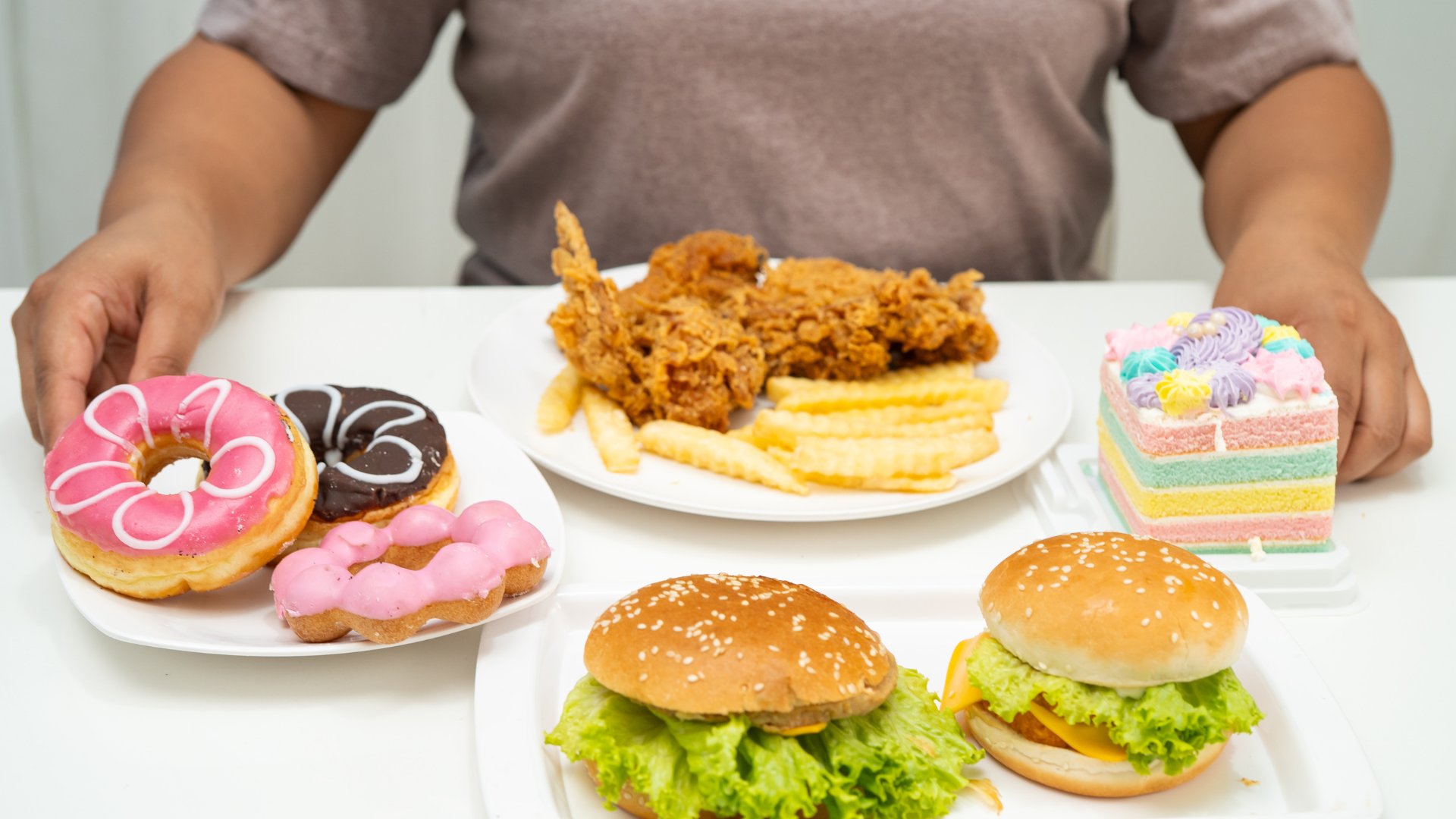
dr-tatyana-el-kour_1_09-10-2025_210408: Well, they’ve turned food into performance. You know, a meal is no longer just for nourishment. It’s content. So that’s the key message that I’d like to come across. So a striking trend is the food pornography. You know, the way they portray food with glossy, slow motion videos of gooey cheese pulls oversized burgers or even desserts drenched in chocolate.
They’re designed for sensory overload or not balance, and so they often showcase fast eating in large amounts as if excess itself is entertainment. And so that’s where the delirium that I spoke about is, is happening. So psychologically these videos light up the same reward circuits as actual eating.
Unlike sitting at the family table, like what we normally do, viewers are immersed in an endless stream, you know, appetite triggered again and again without [00:19:00] satisfaction. So over time, this can normalize over consumption and distort what normal portions look like. And, and then a algorithms, there are many algorithms, okay, that are really, uh, observing and, uh, monitoring your behaviors.
Magnify it. So if you linger on one food reel, your feed can quickly fill up with more, you know, from giant pastable in Italy to viral eat it all in 10 minutes stunts. You know, this micro choice becomes a macro pattern. In your digital environment and it’s hyper-personalized and culturally there’s a flip side to it.
You know, they can also celebrate, you know, the food porn can also celebrate heritage. You know, I’ve seen videos on online or reels like Turkish baklava videos or even Japanese ramen prep. You know, the danger comes when food, it’s also stripped of culture and reduced to, you know, to number of clicks.
dr–supatra-tovar_1_09-10-2025_110408: Oh, [00:20:00] absolutely. And I think if you were to combine that with what we know, uh, in terms of food, technology and engineering, you know, especially within ultra processed foods, they’re, you know, hyper engineered to stimulate our brain’s pleasure centers for sugar, salt, and fat. And that really drives us to eat well beyond fullness, so you have that influence. And then we’re gonna talk a lot more about that. The other side, which is diet culture, influence, and I think you know, the interplay of these two things is creating a lot of confusion and a lot of shame. Would you agree with the shame portion? We’re not supposed
dr-tatyana-el-kour_1_09-10-2025_210408: Absolutely.
dr–supatra-tovar_1_09-10-2025_110408: to eat this food.
We’re supposed to be over here dieting. And so what is the person stuck between the two supposed to do?,
dr-tatyana-el-kour_1_09-10-2025_210408: Yeah, uh, I definitely agree with you on the same piece. And then what we’re supposed to do is, I think [00:21:00] the first, the first step is become aware of the, of the effects, you know, become aware of this environment of what we’re watching and taking a pause just observing. Taking a pause is, is one key element.
And then, uh, and then there are various tricks where you at least normalize the content that you’re watching. So if AI is, is, is trying to super feeded you with content, maybe you can say, I don’t want anymore of this, or minimize this. So you will be in control to actually, uh, take the control seat and, and navigate the system better.
But also gear it towards what you would like to have as a balanced content.
dr–supatra-tovar_1_09-10-2025_110408: Yes. But what about, say younger people who don’t necessarily have that savvy knowledge yet and they’re just becoming inundated. Their feed, they, they say that they’re watching something, diet culture related, orthorexia related, and then they start to see this more and more and [00:22:00] more. How does a parent try to help their teen who might be consuming this content, um, to their detriment?
dr-tatyana-el-kour_1_09-10-2025_210408: Well, that’s where, uh, the role, the regulatory role becomes very, very important and that you need to have filters. Um, basically. So number one is, is, is really you need, you need to have that fil filter piece. And secondly, with parents. Even with youth or teenagers, while yes, they don’t have the prefrontal cortex area as developed, so they cannot make the decisions that an adult could make, but we, we, we, as adults or as parents, we need to lead with curiosity, not with control.
And so they need to teach their children. What do they notice when you, when you, when, when they scroll, and how does it make them feel? And that builds aspects of literacy, you know, media literacy, but also digital literacy. And then if you do it [00:23:00] with joy, with some balance in between, and then a discussion with the family, this becomes even a more entertaining exercise.
Combine it with emotions, you know, like. You know, with emoji with emojis, you know, with every pause you could look at how the AI or the system is interacting with you can really help to support resilience and even critical thinking. Um, so it’s a process. It’s not a matter of, uh, of a one day or a one show, or even a one anchor or a one.
Uh, control, uh, or regulatory control or, or, or peace Research shows that youth, by the way, with strong cultural anchors and positive modeling, are more resilient to harmful media influences than, than those who are not. So it’s very important to have that positive modeling, but also to, to provide the cultural anchor.
And what we are seeing, for example, in the United States is that with, you know, where migrant populations are, are really [00:24:00] large, is that it’s, you know, they’re, they’re, they’re stripped away from their own culture. ’cause the older generation or you know, the gen, gen Z and millennials are completely different than their parents.
They are not even associated with the original culture they came with. And that piece has really, um, has really not helped parents or it has created a gap between parents and children and, and, and, and that gap needs to be addressed. And it cannot be just addressed simply by giving the the algorithmic control.
But it’s also by.
dr–supatra-tovar_1_09-10-2025_110408: Absolutely. And I, I, I work with a lot of teens, young adults, uh, who are struggling with eating disorders and disordered eating. And this is also a part of my book where I recommend that people look at their social media feed and just gauge how they feel when they’re scrolling through it and really look at certain content and if certain content is making them feel bad about themselves, making them feel like they need to diet, making [00:25:00] them feel like they’re not good enough, hide, block, unfollow all of that and gravitate towards things that bring you joy. Like basically my algorithm is puppies and kittens. Kevin Bacon playing, you know, his guitar to his goats. I mean, you name it, whatever, just is like happy place for social media, and so there is a lot more control that you have over your feed. What do you think are like the biggest risks you see with the use of AI algorithms and targeted food advertising when it comes to disordered eating and body image issues?
dr-tatyana-el-kour_1_09-10-2025_210408: Uh, I think the danger is, uh, precision harm. You know, traditional ads cast a wide net, but AI pinpoints individuals. So for one teem, curiosity about fasting leads to endless skipping meals basically. And then, um, and then they feel [00:26:00] good about watching even more of that. For another, a single carb cutting click feels the feed with content, you know, demonizing rice or bread and on the, and then the food, you know, and then on the other side of the story you see the food pornography is, you know, oversized burgers, 10,000 calorie challenges, et cetera, that can normalize the binge style eating. So the system doesn’t know if you paused because you felt fascinated or anxious, it just assumes that you are interested. So the, the longer you pause, the more videos you watch, then this means we need to give you more. And so in this way, algorithms amplify both extremes, restriction and excess.
And in disordered the eating, this is really a horrific piece. And psychology tells us repetition, even deepens, internalization. When restriction or binge style eating is repeated daily, it becomes your norm. So without safeguards, as you kindly mentioned, you know, the hide [00:27:00] post, the block, normalizing the content, even AI risks, turning food from a source of culture and care into a cycle of extremes or even shame and ba blame and guilt, uh, is, is, is, is, is really, uh, and this would be really, really critical to, to address the safeguards would be very important. So this process, you know, understanding what happens is really important. That’s the first step. As you, I, I don’t know about your experience, but working with youth and teenagers, if I tell them to hide, like, why do you want me to hide my, my friends have watched this 12 times.
I only watched it five times. And so you go into the argument of repetition, internalization and what’s happening and, and so. Giving them the power through understanding is, is, is very, very important. So the risks are huge. Yeah.
dr–supatra-tovar_1_09-10-2025_110408: Yes. And I would say teenagers are really responsible, [00:28:00] are responsive to, um, you know, kind of sticking it to the man if they know the man is the algorithm and it’s trying to feed them stuff to, you know, influence them and, um, you know. Like influence their food choices and harm them, then they are more apt to reject that if they know it’s a system that’s coming in trying to harm them.
So teenagers out there listen to that. That’s the way you can stick it to the man. Um, don’t let the algorithm control you. And really base it off of your feelings, like I think our feelings are so important and we don’t tap into them as much as we should. Our bodies tell us when something isn’t right, and you get that awful feeling. Gravitate towards the stuff online that makes you feel good, makes you feel worthwhile, makes you feel like you are good enough. So we’re gonna get into that a lot more in our second half, and we’re out of time for this first half, but oh my gosh, [00:29:00] Tatyana, this is so important for everyone to hear. Mothers, especially of teenage uh, kids, but everyone needs to know how much AI is influencing us and maybe not in the best, most helpful ways. So thank you so much for joining me for the first half
dr-tatyana-el-kour_1_09-10-2025_210408: Welcome.
dr–supatra-tovar_1_09-10-2025_110408: of this Tatyana. And tune in next time for the second half of this amazing interview, senior Psychology Research Fellow, and registered dietician nutritionist Dr. Tatyana El-Kour.
Recent Comments