From Vegetarian Roots to a Plant-Based Life
Sherene Chou grew up vegetarian, guided by both family health choices and Daoist traditions. Over a decade ago, she transitioned fully to a vegan diet—not because of trend or fad, but because of what she learned about the politics of our food system. For her, the shift wasn’t just about personal health. It was about understanding how policy, subsidies, and industry influence the foods we’re told to eat.
📘 Learn more about how diet culture and food politics shape our choices in my book Deprogram Diet Culture.
The Politics of Food: What They Don’t Tell You
Most people don’t realize how deeply politics is woven into what ends up on their plates. Sherene explains that the Dietary Guidelines for Americans—updated every five years, set the tone for school lunches, meal programs, and even health recommendations. Yet, when she reviewed the public comments for the current update, she found nearly half came from the meat industry and the other half from plant-based advocates.
This isn’t just science, it’s lobbying, subsidies, and policy battles. That’s why Sherene encourages everyone to explore resources like Marion Nestle’s Food Politics blog and Food Sleuth Radio by Melinda Hemmelgarn. Awareness, she emphasizes, is the first step to reclaiming power as eaters and citizens.
🎧 Dive deeper into the hidden influences shaping your diet on the ANEW Insight Podcast.
Whole Food Plant-Based vs. Vegan: What’s the Difference?
There’s confusion around terms like vegan and whole food plant-based. While veganism excludes animal products entirely, whole food plant-based eating also avoids most processed foods. But Sherene makes a critical point: rigid rules can backfire.
Instead of chasing perfection, she suggests focusing on adding more plants and fiber to your plate. This approach is flexible, realistic, and more sustainable long-term. As Sherene says, “It’s about progress, not all-or-nothing.”
🌿 Explore my 7-step framework for breaking free from diet culture in the Deprogram Diet Culture online course.
Fiber: The Unsung Hero of Gut Health
While protein dominates headlines, fiber is often ignored. Yet Americans consume double the protein they need and far less fiber than recommended. Why? Because protein is marketable—linked to strength and athleticism—while fiber is associated with bowel movements. As Sherene quipped, “Fiber isn’t sexy.”
But fiber does far more than keep you regular. It:
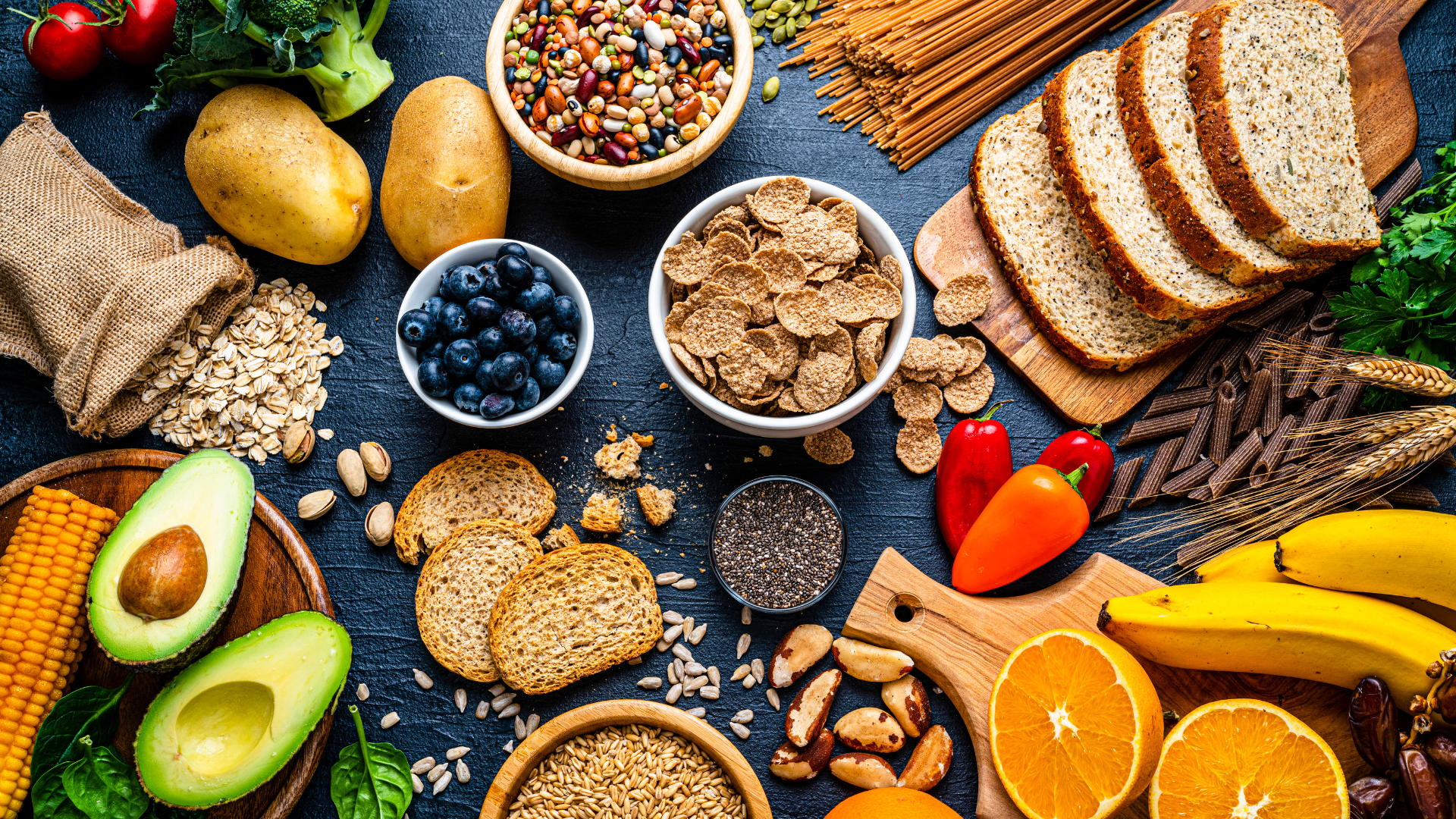
- Supports a thriving gut microbiome
- Enhances mental health by reducing anxiety and depression
- Improves immune resilience and metabolic health
- Provides prebiotics that fuel probiotics
Dr. Supatra and Sherene both agree: we need to make fiber sexy again.
📘 For strategies to reconnect with your body’s natural signals—including hunger, fullness, and digestion—check out Deprogram Diet Culture.
Why Plants Matter for Sustainability
Sherene highlights that 80% of global deforestation is linked to food systems, with industrial meat production driving biodiversity loss and land overuse. Focusing our diets on just three crops—corn, wheat, and soy—strains the planet and our health.
At Food + Planet, the nonprofit Sherene co-founded, sustainability is viewed through four dimensions:
- Planetary health – preserving ecosystems and reducing emissions
- Nutrition – ensuring balanced, evidence-based diets
- Sociocultural – respecting traditions and inclusivity
- Economic – making sustainable foods accessible and affordable
It’s not about perfection. Even small shifts, like Meatless Mondays or swapping one meal a day for plant-forward options, can reduce emissions, save land, and improve health.
Practical Steps to Go Plant-Forward
Going 100% vegan isn’t realistic—or necessary—for everyone. Sherene suggests:
- Start with one meal a day or one day a week of plant-based eating
- Explore plant-based meats to ease transitions without sacrificing taste
Focus on meals that look delicious rather than restrictive - Reimagine favorite dishes with plant-forward ingredients
As Dr. Supatra reminds us, even small changes bring benefits: better digestion, improved mood, and a lighter environmental footprint.
🎧 Listen to the full conversation with Sherene Chou on the ANEW Insight Podcast.
🌿 Begin your own journey with the Deprogram Diet Culture course.
📘 Get inspired with the Deprogram Diet Culture book.
Key Takeaways
- Food is political: Policies and subsidies shape what’s affordable and accessible.
- Fiber is powerful: It supports gut health, mental well-being, and immunity.
- Sustainability matters: Our diets affect both planetary and personal health.
- Small steps count: Even one plant-forward meal a day makes a difference.
✨ For more conversations at the intersection of nutrition, psychology, and wellness, subscribe to the ANEW Insight Podcast and explore my online resources.
View here full podcast Transcript here:
Dr. Supatra Tovar: [00:00:00] Welcome to the ANEW Insight podcast. I am Dr. Supatra Tovar, and I am very excited to have award-winning dietician and chef, and former classmate and former internship mate Sherene Chou with us today. Sherene, welcome.
Sherene Chou, RD: Thank you. Really excited to be here today.
Dr. Supatra Tovar: Yay. I have been following Sherene forever. She’s just been doing some really amazing work out in the field ever since we graduated and finished our internships. And so this is my chance to really pick her brain and get to know the work that she’s doing out there a little bit better.
Dr. Supatra Tovar: So before I delve into the questions, I am going to read a little bit about Sherene and then we’ll get into it. Sherene Chou is an award-winning dietitian and chef dedicated to fostering a more equitable and sustainable food [00:01:00] system through plant-based nutrition, culinary medicine, and health equity.
Dr. Supatra Tovar: She co-founded Food + Planet an initiative aimed at empowering healthcare professionals to transform the food system. Sherene has collaborated with national brands and institutions. To develop innovative programs that enhance accessible and culturally inclusive nutrition education. She has served as chair for the Academy of Nutrition and Dietetics, Vegetarian Nutrition Practice Group, and as a nutrition advisor for the Plant-Based Foods Association.
Dr. Supatra Tovar: Her work has been featured in prominent publications such as The New York Times, Today’s Dietician. And British Vogue Sherene, welcome.
Sherene Chou, RD: Thank you so much and.
Dr. Supatra Tovar: I’m so excited to pick your brain. I wanna go back [00:02:00] into your inspiration, your personal journey into plant-based nutrition and what inspired you to focus on sustainable food systems.
Sherene Chou, RD: Yeah, so it’s something that I’ve been really interested and I think it evolved a lot over time. So I was born and raised vegetarian, and that was based on health preferences from my family. My whole family’s vegetarian. So born and raised, vegetarian, my siblings, and then also being Doaist and religious traditions.
Sherene Chou, RD: So following that, and then just combining the two pieces. And then over time, about over 10 years, 10 or 12 years ago shifting to a 100% plant-based diet. So a vegan diet. And my big change for that was, and it might not seem like a big jump to people from vegetarian to vegan. But I think for a lot of vegetarians, maybe they wouldn’t think about a vegan diet for those [00:03:00] nuances. But anyways really transitioned to a vegan diet because the more I learned about the politics of our food and our whole food system was kind of one of the things that helped me shift my diet in that direction. And also I wasn’t having dairy foods to begin with because most people who are non-white are allergic to dairy and can’t digest it. so that was one piece. And then I was really having eggs and then just kind of finding alternatives for that. And so I’m really happy, had two really healthy vegan pregnancies and happy to share more. Yeah, so that’s kind of been my journey just from a personal to a professional and kinda larger perspective of just my own education and my own preferences.
Dr. Supatra Tovar: Yes, and I can relate, think delving into our food system has really just been eye-opening for me and has, along with the [00:04:00] health benefits of being plant-based. There’s so many and we’re gonna go into those and talk about them. The politics of the food systems, I think are worthy of a discussion.
Dr. Supatra Tovar: I think a lot of people don’t really have as much of a background or information about that because it’s kept so quiet. If you could give our listeners a picture of what you learned as much as you feel comfortable to what did you learn and what, how did that make you transition to fully plant based?
Sherene Chou, RD: I think it’s I mean I was already not having meat just based on my religious and just personal background, but I think fully plant-based, just learning about food subsidies the dairy industry and kind of learning more about how all those pieces influence policy, influence kind of recommendations in a lot of ways. I think it’s very, it’s a very complex [00:05:00] topic and I think that what I want to, before I get into more is that I, I really wanna share that I food shaming is not something I support at all. I think that people are very much welcome to have their food choices. I think it’s really important.
Sherene Chou, RD: And also another big thing that I strongly advocate for is access to food and health equity. And I think that, you know, just because that is my preference, and of course I think from a health professional standpoint, so much evidence points to certain things, but without access and affordability that’s just not realistic for a lot of people.
Sherene Chou, RD: In terms of like, let me just get all fresh fruits and vegetables. Let me just go for all organic. Let me just go for all local things. I think a lot of the conversations we’re having now in politics with a lot of different people in office and different people in decision making positions [00:06:00] are pushing for a certain perspective, and I think that there’s nothing inherently wrong with, of course, having more fruits and vegetables because we all know that that’s creates healthier, you know, bodies, healthier food systems. But is it realistic? I think that just having that nuanced conversation and then not having the shame around that piece.
Dr. Supatra Tovar: Right. So what was it for you that tipped you exactly like tipped you toward 100% plant-based? What was it that you learned?
Sherene Chou, RD: I think learning about the dairy, dairy industry and then speaking more to, different people learning more from different lectures and the politics of, like, for example, right now we’re in the next round of the dietary guidelines. The dietary guidelines are kind of defined once every five years, and that’s on a national level.
Sherene Chou, RD: And I think as dietitians, [00:07:00] we all know that that’s our guiding principle for defining, you know how we wanna educate people on how to eat. That also defines different meal programs out there. So school lunches anything government funded are following dietary guideline patterns. And then also when we’re talking about when healthy food patterns, we follow the dietary guidelines. So recently, I think the last two weeks, they had people going. So part of the process of defining the guidelines, you have public comments, but these public commenters are not random, it’s, I looked at the full list and half the people were from the meat industry and the other half were advocating for plant-based diet.
Sherene Chou, RD: So it’s just, there’s this big divide and you know, they might not have a direct influence on the overall guidelines because that ultimately is not shaped from the committee. They could give recommendations based on the current research, but [00:08:00] the whole process is not always transparent. And I think that just learning. I just encourage any listener to learn a little bit more about the politics behind foods and but I don’t know if that’s too, too nuanced.
Dr. Supatra Tovar: Well, maybe you can point people toward, you know, sites where they can get, you know, the
Sherene Chou, RD: Marion
Dr. Supatra Tovar: information.
Sherene Chou, RD: Marion Nestle has a site called Food Politics. I mean, I think that’s a great blog. Is it perfect? No, but I do think that she is a incredibly knowledgeable professor from NYU, kind of one of the people that have shaped a lot of food, politics and public health views. And so I think she has a lot of amazing knowledge and she issues a blog every single day, you know, on different topics focused on food politics, and has written several books on it.
Dr. Supatra Tovar: Yeah, she’s a wealth of information. [00:09:00] I’ve, I’ve read her books and I think for anyone who needs a background in just the history of food politics, she is the woman to go to. Also, Melinda Hemmelgarn, who’s the Food Sleuth Radio personality. She also has a lot of great information. And I think the more that people can educate themselves, then they can make decisions that are not only
Dr. Supatra Tovar: good for their health, but also for you know, their wallets for the planet. I think the more informed we are, the better we are as consumers. But how do you define a whole food plant-based diet? Does that differ from a vegan diet? I think there’s a lot of confusion out there about
Sherene Chou, RD: I
Dr. Supatra Tovar: think
Sherene Chou, RD: that.
Sherene Chou, RD: are a lot of different diets out there. And I don’t particularly, guess, push for one diet or the other. It’s really how do you add more plants to your plate? How do [00:10:00] you add more fiber to your day? I feel like that is. The easiest way to process the information and also makes it not intimidating when I’m talking to people or making recommendations.
Sherene Chou, RD: So if we’re able to advocate for just more plants in general. More access to plants, more plants on people’s plates. That’s the best way. And going back to your question about defining a whole food plant-based diet, a lot of people use that term very specifically, so whole food plant-based as it is a vegan diet, but it’s also excluding a lot of different vegan foods that might be processed. And for me, I, I don’t do not shy away from certain like veg meats, vegan meats and the, even the term processed is very complex. It’s very triggering for different [00:11:00] people depending on who you’re talking to. Is there a place for processed foods in your diet? Yes. I don’t think that eating a 100% whole food, plant-based diet is a bad thing, but I also don’t think that it’s realistic for a lot of people.
Dr. Supatra Tovar: I think that that’s really powerful and yes, I think that it can come across as exclusionary
Sherene Chou, RD: Exactly.
Dr. Supatra Tovar: primarily for health reasons. That’s why it’s. This way, but I think it become elitist,
Sherene Chou, RD: Mm-hmm.
Dr. Supatra Tovar: and it can be hard to sustain Going to restaurants where, you know, they may not have completely 100% whole food plant-based options. Having some flexibility around it, but really just trying to promote the need for us to have more plants and for to have more fiber. So, specifically talk about fiber, because I think people tend to [00:12:00] think
Dr. Supatra Tovar: you know, if you look out in the media today, it’s like all they’re getting is you need more protein. You need more protein, you need more protein. And I, you know, I don’t think we’ve been protein deficient for a very, very, very long time, and that certainly is kind of market driven, that push.
Sherene Chou, RD: Yeah.
Dr. Supatra Tovar: But we don’t hear as much about fiber, and so just talk a little bit more about the importance of fiber and why that might not be as popular in the media today.
Sherene Chou, RD: I mean, I think protein is a sexy topic. Protein, when you think about that, I feel like from a marketing perspective, it’s very visual. You can think about protein relating to strength or protein relating to, you know, the sports or athleticism of people. You’re not. Protein, we are not protein deficient.
Sherene Chou, RD: If we’re looking at the dietary guidelines and the [00:13:00] research and the evidence, you know, most Americans consume double the amount that is needed, and so that’s not something we’re deficient of. I think why fiber is not talked about as often is that it’s not a really sexy topic. Fiber is associated with pooping, bowel movements being regular, so. know, is that gonna be on a billboard? I don’t think so. Is, you know, so it’s
Dr. Supatra Tovar: How do we make pooping sexy again?
Sherene Chou, RD: And I think, , and I think as dietitians, you know, or health professionals, we talk about it so regularly, it’s so normal to us. But I was just at this comedy health show last week and it was, I think it made a lot of people in the audience feel uncomfortable as a couple of doctors
Sherene Chou, RD: and then a couple of comedians who put on this health show, health comedy show to encourage people to learn more about their gut health and, you know, getting their checkups. [00:14:00] And I didn’t think that people would be uncomfortable, but I’m around, you know, I’m not, I talk about it so common and normal.
Sherene Chou, RD: You know, it’s normal conversation, but I could see people visibly uncomfortable. And so imagining, you know, something like that on a commercial or a billboard even though it needs to be talked about, but it’s just maybe not that marketable. And then,
Dr. Supatra Tovar: Well, yeah, I think it’s just because only associated with pooping, which is definitely not sexy, but it fiber is also so important for so many other processes. So maybe you can help people understand why it’s so important that we get sufficient fiber in our day.
Sherene Chou, RD: Yeah, I mean, I think it really is great for your overall, I mean, first of all, it’s something that we need and it helps you, of course, be regular, but also helps you with your gut health as well. And when we’re talking about fiber, I think a lot of people think [00:15:00] about like, okay, like probiotics.
Sherene Chou, RD: And then at one point there was a lot of conversation around prebiotics as well. And I don’t know if you’ve talked about prebiotics before already,
Dr. Supatra Tovar: No.
Sherene Chou, RD: You know, those are the things that kind of feed, you know, feed into the probiotics. And so a lot of those foods are from fiber foods. You know, one of them is Jerusalem artachoke. I think, I mean, I’m just thinking back to like our school days, and I think someone even did a project on that. But so it’s just, it’s, it’s a really important piece of what we’re doing. Not just that, but there’s a lot of micronutrients that we’re getting in vitamins from the foods that have fiber.
Sherene Chou, RD: So these are foods that are leafy, you know, not just leafy greens, but fruits and vegetables, you know, just fruits, vegetables, and whole grains have a lot of amazing fiber, and so all of these things are part of what we recommend when we’re talking about [00:16:00] a balanced diet or even having a plant forward or a plant-based diet.
Dr. Supatra Tovar: Yes, absolutely. And you know, we have on the podcast talked about the gut microbiome and it changes significantly with the more fiber and the more plants that you add to your diet. And they’ve done a lot of different studies of the gut microbiome between, you know, somebody who’s following a standard American diet
Sherene Chou, RD: Yeah.
Dr. Supatra Tovar: who has a lot more plants in their diet.
Dr. Supatra Tovar: And the, the gut microbiome changes with the diet composition. And that has proven to be so beneficial for our health in preventing disease and enhancing cognitive function and reducing anxiety and depression. So I, I really do hope that we can make fibro sexy
Sherene Chou, RD: Yeah.
Dr. Supatra Tovar: some way. If we maybe even open up and expand its [00:17:00] benefits beyond just pooping.
Dr. Supatra Tovar: Right.
Sherene Chou, RD: Absolutely. And I think, you know, we all talk about it so much in so many different ways, but I think fiber, when you think about it, it’s. That’s kind of the direct, direct relation to it. Just talking more about plants a little bit and fiber, I think, and how it ties into sustainability is the, having a really wide range of fruits and vegetables can help change your microbiome, like you were saying.
Sherene Chou, RD: And then also different foods also feed off of that. Most of what, where most people are consuming are just from. Three different foods like wheat, corn, and hold on I’m like and is it rice? But anyways, it’s not, and that also kind of damages our whole food system because of the lack of diversity and biodiversity.
Sherene Chou, RD: And so we’re focusing on just. These very few crops, that are kind of shaping our overall diets it not only [00:18:00] impacts us from to a micro level like our own individual bodies and our microbiome, but it also impacts on a macro level kind of the food system and the land and not being able to regenerate in that sense.
Dr. Supatra Tovar: Yes, absolutely. So let’s talk a little bit more about how eating more plants contributes to sustainability. And I do believe it’s wheat, corn, soy, primarily for agriculture
Sherene Chou, RD: Yes.
Dr. Supatra Tovar: The feeding of animals as opposed to the feeding of us and how much acreage goes towards, especially cattle production.
Sherene Chou, RD: Yes.
Dr. Supatra Tovar: But really all animal food production takes up so much land
Dr. Supatra Tovar: for agriculture that could go to feeding more people. So go into that a little bit more. How does a plant-based [00:19:00] or plant forward diet help with sustainability and also with global warming?
Sherene Chou, RD: Yeah, I mean it’s, it’s very, let’s see, how do I wanna talk about it? It’s very complex, but I think it’s easy to talk about it in a few simple points. Of course, eating more plants helps with diversifying what we’re growing. It also helps, like I mentioned, diversifying that gut connection as well. What we’re currently doing now is very much impacting our overall land, our resources. Just to quote this paper, which I could put in the notes later, 80% of the world’s d deforestation is related to food systems and it is the leading cause of land use and biodiversity loss. And that’s what I was talking about in terms of biodiversity loss and how important it’s to diversify our diets. All that to say though is [00:20:00] that just the current system we’re operating in is not sustainable because. And I feel like it’s a very challenging, obviously challenging topic to solve because there are so many actors that, and different inputs. Of course there’s the policy piece, there’s the consumer piece, you know, there’s people who are eating every day. There’s also the commercial piece, so people who are making the foods and making money off of different foods. And then what’s accessible and what’s realistic and so without going back to why I even wanted to go into sustainability is thinking about the policy piece because without changing policy policy, it’s very hard to change downstream
Sherene Chou, RD: a lot of different things. Of course we’re, you know, I’m always encouraging advocating people where they can to kind of choose more sustainable products or look into brands or companies to see how they’re run. If you do have that [00:21:00] choice, you know that’s to choose the different foods and the different labels.
Sherene Chou, RD: I think that in terms of sustainability looks at so much more than just what we typically think about sustainability in terms of the planetary or the land piece, but something at Food + Planet, which is the nonprofit I co-founded with three other dietitians. We develop kind of our theory of change is focused on the four different dimensions of sustainable diets.
Sherene Chou, RD: We call that our 4 D framework. And not only are we thinking about planetary health which is a lot of things we’re talking about now, but also nutrition from a dietician perspective or health professional perspective, but the sociocultural aspects as well as the economic aspects. So looking at all different four dimensions of sustainable diets is how we can transition to more sustainable food system. There isn’t like a linear answer or linear way to doing [00:22:00] this, but as health professionals, when we’re building out education think about ways that we can engage in these different pieces when we’re talking to patients or when we’re talking to government policy changing government policies or any, any places that we’re working in kind of how we can lock in into these pieces to make slow shifts.
Dr. Supatra Tovar: I love that and I think that you know, people think that it can be kind of an all or nothing thing, and it doesn’t necessarily have to be. I heard some statistics about if you just did one day a week, like meatless Mondays,
Sherene Chou, RD: Mm-hmm.
Dr. Supatra Tovar: How much of a difference that would make, not just for your health, but for the health of the planet how many emissions would actually be reduced?
Dr. Supatra Tovar: Just what kind of a difference it would make economically and globally. And that to me was really profound. I think that you know, people think, oh, I can’t just go 100% vegan. And of course [00:23:00] that’s very difficult for a lot of people and it’s also, you know, kind of, not. Not accessible to so many people, but so many people can do one day a week.
Dr. Supatra Tovar: What other tips do you have for people to, you know, maybe transition more to plant forward eating?
Sherene Chou, RD: Yeah. I mean, I think what you said is right. That’s the point is that it does not have to be all or nothing. I think that people, I. When it’s all or nothing, a lot of people are trying to catch you on failing and then that doesn’t help or encourage, you know, it just, it’s not, it then becomes about something else versus your own health. And I think that if you are able to let go of all or nothing. But think about it as something as simple as just one meal a day, or one meal out of the, you know, the whole week. And then seeing, you know, you might even have naturally some plant-based or plant forward meals that [00:24:00] you’re already having that you might not know about. Or even swapping out different proteins that you’re thinking about, you know, diversifying the proteins that you’re consuming. Those are just some simple ways and strategies. And when you brought up Meatless Monday, that whole campaign, they actually just updated their website, I think last month and launched it.
Sherene Chou, RD: And so they have all these different amazing resources on different strategies and even recipes on there for people to try. So it doesn’t have to be all or nothing. And definitely, don’t feel like it’s. I feel like try to reimagine the meals that you are used to having, or even try something different and something new. Because if you’re using something that you usually have, and then you just say, okay, well I’m just gonna remove the meat out of it, and then you’re gonna say, okay, well that wasn’t fulfilling, because of course it won’t be because that’s not something you’re used to having in that way. You’re used to having it created in a different way. So re-imagining different meals or look at through [00:25:00] different recipes that really inspire you and that look delicious to you. I think focus on something that looks delicious to you is something a great way to try something new.
Dr. Supatra Tovar: Yes. And that’s why I think there is such a benefit in those plant-based meats
Sherene Chou, RD: Mm-hmm.
Dr. Supatra Tovar: They do allow for you to, to experience a, a plant-based meal without necessarily sacrificing the texture and the flavors that you were so used to. And that can certainly be a helpful transition. And I know a lot of people are, you know
Dr. Supatra Tovar: thumbing their nose up. But as far as the health benefits of, even if it is a processed food,
Sherene Chou, RD: Mm-hmm.
Dr. Supatra Tovar: you’re gonna have more health benefits from that plant-based meat than you would have you know, from animal products. So I think it’s valuable to experiment and then to just kind of dip your toe in and to see how you feel, especially after a plant-based meal versus [00:26:00] a standard American diet meal.
Dr. Supatra Tovar: And then I think you can let your body help you decide, because oftentimes your body’s like, oh, look at all this fiber. I feel amazing. My mental health is better, my pooping is better, the whole thing. And so.
Sherene Chou, RD: Which contributes your overall mental health.
Dr. Supatra Tovar: Absolutely. Well, we’re out of time for this half of this podcast and I didn’t even get to so many of my questions, so I’m just gonna keep on picking your brain.
Dr. Supatra Tovar: But hang tight, Sherene, and we’re gonna be back for the second half of this incredible podcast with award-winning dietitian and Chef Sherene Chou. Please join us for the second half and thank you so much for joining us for this half.
Recent Comments