Food sensitivities can feel overwhelming. You might eat “healthy” foods, yet still experience bloating, rashes, fatigue, or digestive issues. Award-winning dietitian and root cause nutritionist Christa Biegler, host of the popular Less Stressed Life podcast, offers an approach that doesn’t rely on extreme restriction but focuses on understanding your body, improving digestion, and calming your nervous system.
In this article, we break down her practical advice for reducing inflammation, optimizing digestion, and embracing mindful eating – all without giving up the foods you love.
Understanding Food Sensitivities
Christa explains that many people seeking help for food sensitivities are already health-conscious eaters. The issue is often how the body processes and digests food, rather than what is being eaten. Overly restrictive diets, like FODMAP or carnivore, may provide temporary relief, but they often create stress and nutrient gaps.
Her approach starts with triage, identifying which body systems need immediate attention. She focuses on reducing inflammation, supporting digestion, and strengthening the immune system – without unnecessary food elimination.
Reducing Inflammation Without Extreme Restriction
Inflammation is an umbrella term – it can be caused by stress, environmental toxins, gut dysbiosis, blood sugar fluctuations, and certain foods. While some foods may trigger symptoms in certain individuals, Christa emphasizes that the goal is not to eliminate everything, but to support the body in processing and tolerating foods better.
Common inflammatory triggers can include:
- Gluten
- Dairy
- Histamine-rich foodsOxalates (in some individuals)
Rather than strict elimination, Christa encourages building a foundation of whole, high-quality foods and focusing on synergistic nutrients that help the body function optimally.
Supporting Digestion with Simple Steps
One key insight from Christa is that many people aren’t digesting their food properly, no matter how healthy their diet. Supporting digestion can be a “quick win” for improving overall wellbeing. Some effective strategies include:
- Digestive enzymes: Help break down food temporarily.
- Digestive bitters: Stimulate the pancreas to produce its own enzymes, teaching the body to digest naturally.
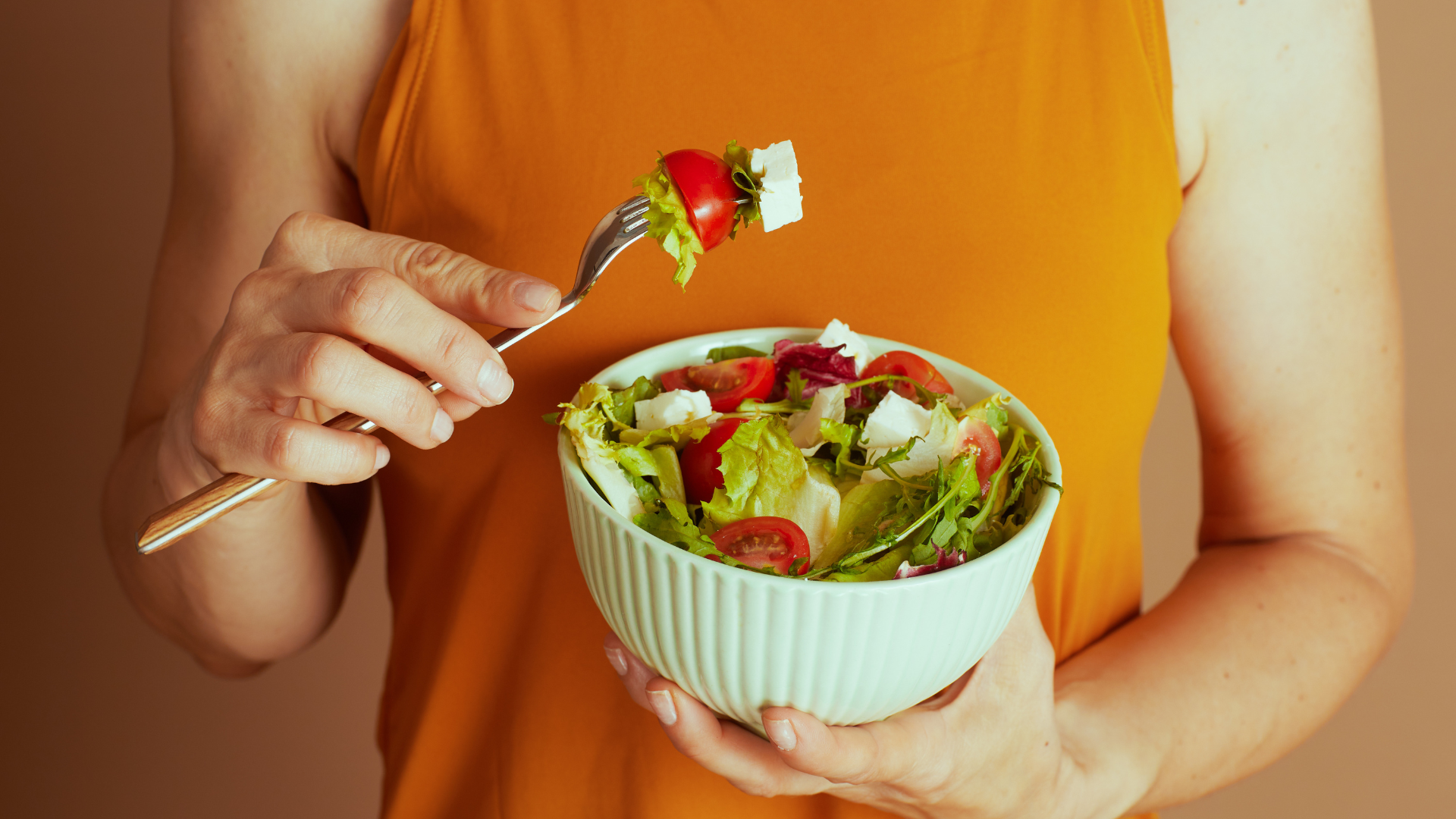
- Mindful eating: Slowing down, chewing thoroughly, and enjoying your meals can dramatically improve digestion and nutrient absorption.
Christa also shares an inspiring example: a client who chewed cumin, coriander, and fennel seeds (common in Indian cuisine) showed remarkable improvement in digestive enzyme adequacy. This highlights that small habits can have a big impact on gut health.
The Role of the Nervous System
Food sensitivities and eating behaviors are often influenced by the nervous system. Stress, overthinking, or past trauma can trigger behaviors like:
- Mindless snacking
- Over-restricting foods
- Feeling out of control around meals
Christa emphasizes that calming the nervous system is crucial for long-term results. Simple strategies include:
- Deep breathing for a few minutes each day
- Checking in with your body and heart before meals
- Practicing curiosity rather than fear about food choices
When the nervous system is calm, the body can digest and absorb nutrients more effectively, making any diet more beneficial.
Mindful Eating: More Than Just a Trend
Mindful eating is about slowing down and being present during meals. This practice allows your body to signal fullness, improves digestion, and reduces stress responses triggered by food. Christa encourages people to:
- Stop, smell, and enjoy their food
- Notice patterns in eating speed and habits
- Adjust their approach based on awareness, not fear
Even for those who love food or struggle with overeating, awareness is the first step toward change.
Finding Balance: Curiosity Over Restriction
Instead of focusing on fear or rigid rules, Christa promotes curiosity-driven nutrition:
“I wonder what would happen if I adjust my diet for three weeks and observe how my symptoms change?”
This approach allows you to experiment safely, measure results, and regain control over your eating without stress or guilt.
Key Takeaways
- Food sensitivities are often about digestion, not just the food itself.
- Reduce inflammation without unnecessary restriction by supporting the gut, immune system, and nervous system.
- Small habits, like mindful eating or using digestive bitters, can dramatically improve nutrient absorption.
- Stress management is essential – a calm nervous system supports digestion and overall health.
- Curiosity beats fear – experiment with your diet intelligently and notice the effects on your body.
FAQs
1. What is root cause nutrition?
Root cause nutrition looks at the underlying reasons your body reacts to food, like digestion issues, stress, or nutrient deficiencies, rather than only removing foods
2. How can I reduce inflammation without eliminating foods?
Focus on whole, nutrient-dense foods, support digestion with enzymes or bitters, and reduce stress. Targeting overall inflammation, not just single foods, is key.
3. What is mindful eating and why is it important?
Mindful eating means slowing down, fully experiencing your food, and being present. This improves digestion, absorption, and helps regulate the nervous system.
Curious to Learn More from Christa Biegler?
Discover deeper insights on root cause nutrition, managing food sensitivities, and simple, practical strategies for lasting health. Follow Christa on her social media channels to stay updated with her latest tips and expert advice.
Links:- https://www.christabiegler.com , https://www.christabiegler.com/podcast https://www.facebook.com/christabieglerrd , https://www.instagram.com/anti.inflammatory.nutritionist/ https://open.spotify.com/show/4cVkVGhrAyPO6mHeVWVH90
Continue Your Journey
- 🌿 Rebuild body trust and nervous-system regulation inside my step-by-step program: Deprogram Diet Culture course
- 📘 Go deeper on mindset, cravings, and sustainable health: Deprogram Diet Culture book (paperback, Kindle, and audio) — find it via the book page on my site
- 🎧 Listen to the full ANEW Insight episode featuring these practices and Dr. Lavretsky’s research
View here the full podcast Transcript:
[00:00:00]
dr–supatra-tovar_3_12-03-2025_113643: Welcome back everyone. I am so excited to have this second half of our interview with award-winning dietician, root cause, nutritionist, and host of the very popular, Less Stressed Life podcast. Christa Biegler. Welcome back.
christa-biegler_2_12-03-2025_123642: Thanks for having me.
dr–supatra-tovar_3_12-03-2025_113643: Christa gave us some really amazing insight into a lot of the causes of our food sensitivity, and it’s really about, uh, what we’re ingesting, but also how we’re ingesting.
And so I really wanna get into how you treat people for food sensitivities. How is this different than, say, other dieticians who might just, you know, stick you on a FODMAP diet?
christa-biegler_2_12-03-2025_123642: Yeah. Well, I’m just, I, I almost forget this because it’s so natural to me. To not [00:01:00] eliminate. Most of my clients come in as already really healthy eaters. They’re already having a really good diet, so I’m not looking to restrict anymore, to be honest, anything that’s going to increase stress is typically contraindicated,
dr–supatra-tovar_3_12-03-2025_113643: Mm-hmm.
christa-biegler_2_12-03-2025_123642: so we wanna
dr–supatra-tovar_3_12-03-2025_113643: Yep.
christa-biegler_2_12-03-2025_123642: take that into account. For me, the first step is really triage. It is figuring out which system needs priority. So in the last five years we’ve had a massive increase in hypersensitivity, meaning people finding that they are reacting to everything.
dr–supatra-tovar_3_12-03-2025_113643: Wow.
christa-biegler_2_12-03-2025_123642: they are reacting to literally everything topically, orally, like everything. And so when that is happening and there’s some essentially like two main places we can over, I like to oversimplify things whenever possible, like can we reduce it down to a couple of places and. The old way, the old functional medicine way was just to come in. And the first step in the integrative process, uh, was removing. And so we kind of just mentioned that, but in general, there’s, what I would wanna do is remove inflammation without [00:02:00] unnecessary restriction. And how you do that is by supporting
both the gut and immune system, and there’s a few steps to that. And then also drainage and detoxification. Now there’s about four systems to that and kind of like a reverse of operations on how you do that, so I’m happy to talk about anything. The other option though, so you can go straight to that, which is my remove, is reducing inflammation without unnecessary elimination, but based on the premise of whole food, like we’re also. Having this foundation of whole high quality food and improving digestion. So everyone who comes in, we’re gonna support with some synergistic nutrients and optimize and improve digestion. Because remember in the last episode I said, no one’s digesting, so let’s just go ahead and stimulate and support digestion.
Now, by the way, there’s many ways to do this, right? We talked a little bit about that, like actually stopping to enjoy the food. That’s always really great best practice that’s gonna, honestly, that behavior change takes some time for people. Right.
dr–supatra-tovar_3_12-03-2025_113643: It really does
christa-biegler_2_12-03-2025_123642: yeah, it’s hard. Behavior [00:03:00] change is harder than taking a supplement, to be honest, for a lot of people. So I’ll kind of do a little bit of both.
dr–supatra-tovar_3_12-03-2025_113643:Great.
christa-biegler_2_12-03-2025_123642: Supplements to me are shortcuts. So we want to get results because that helps us get to where we wanna be. Usually if we’re able to get results, we’re gonna feel better, we’re able to feel better. We improve our capacity and have lots of feelings about capacity and like the psychological
concept of balance as well. Um, ’cause I think that’s such a big deal. Like we can’t just stack more things for people to do. And so we look for a little bit of like both ends of it. So for example, something someone could do is they could take a straight up digestive enzyme. I do a little bit of a combination with digestive bitters because bitters kind of teach a man to fish instead of giving him the fish, right?
The enzymes don’t actually change how the body is digesting after you take away the enzymes. But if you use digestive bitters that actually stimulate the pancreas to secrete their own pancreatic enzymes,
dr–supatra-tovar_3_12-03-2025_113643: Hmm.
christa-biegler_2_12-03-2025_123642: it’s actually supporting that whole process through. And I, this [00:04:00] was a, an epiphany personally for me on gut testing.
There are some markers. That I, I did gut testing, on everyone for many years. And there are some markers that show digest digestive adequacy or capacity essentially. And I really didn’t see them move when people were on enzymes, but at one point I saw some people, there was, um, I love culture and like how we do things differently in culture, right?
So I was remind people like, you know, if you go to an Indian restaurant and you’re leaving, there’s fennels that are licorice covered. But I had a, a client who lived in the US, but because of her Indian culture, she would chew on different seeds, you know,
dr–supatra-tovar_3_12-03-2025_113643: Um.
christa-biegler_2_12-03-2025_123642: before or after every meal, like cumin and coriander and fennel.
And her digestive enzyme adequacy on stool testing was, remarkable.
dr–supatra-tovar_3_12-03-2025_113643: Wow,
christa-biegler_2_12-03-2025_123642: It was through the roof compated to everyone else. I’m like, what is this woman doing? And then I saw it again. And so it was actually very, it was not mainstream at all. Like, it’s so fun to actually see that evidence and proof. I’d actually [00:05:00] sort of forgotten that story, um, until I started telling you that, but that
dr–supatra-tovar_3_12-03-2025_113643: that’s awesome.
christa-biegler_2_12-03-2025_123642: was a really big catalyst
at one point I was like, whoa, I like could see the difference on this. A lot of times you cannot, there are times where you cannot always see differences on tests all the time, and so that one was really fun. But I share that because talking about digestion can feel a little ambiguous, to be honest, right?
And so there’s behavior change in how we’re actually approaching the food and the meal. And by the way, if you’ve become uncomfortable or if you have symptoms after eating, you may have generated quite a fear response or a, a stress response actually from eating. And I find that is actually the case, um, with people when they’ve been really health conscious for a long time, they’ve been trying to manipulate things, it becomes more significant.
So we wanna go ahead and give them some things to help the body digest while working on those other pieces that are gonna be longer term, like the behavior change.
dr–supatra-tovar_3_12-03-2025_113643: Yeah. And give, give us a, a an example of how you would help to reduce inflammation besides the bitters. Like what, what would you give [00:06:00] as far as
christa-biegler_2_12-03-2025_123642: before that step. Yep.
dr–supatra-tovar_3_12-03-2025_113643: mm-hmm.
christa-biegler_2_12-03-2025_123642: just, I mean, to be honest, it’s like where do you put these things in? And for me it’s where can we get a win right away?
dr–supatra-tovar_3_12-03-2025_113643: Mm-hmm.
christa-biegler_2_12-03-2025_123642: improving digestion is gonna be a win. So that’s actually the step before, um, reducing inflammation. So reducing, so if inflammation is gonna be really fueled by, so inflammation’s sort of like an umbrella, right?
It’s really a response to what’s happening in the processes in the body. So you’re gonna see a lot of inflamma inflammation increased massively when there’s a lot of toxic burden load. I see a ton of mild to moderate mycotoxins that most people would dismiss. Uh, I have a lot of feelings about that, and that’s gonna
tax the immune system, it’s gonna tax the drainage systems and it actually is gonna tax the adrenal system because I was talking about how you actually triage at the very beginning, which state, which place do I start at? And when people are really hyperreactive, you actually have to start with putting [00:07:00] back nutrients and supporting the stress response first.
So that’s, that’s not what you asked, but I just wanted to make sure I finished that thought. Um, so
dr–supatra-tovar_3_12-03-2025_113643: Yes.
christa-biegler_2_12-03-2025_123642: one or two places either reducing inflammation without unnecessary restriction, so. What’s the baseline, right? If someone was eating a bunch of things that were not easily to digest, I’m not gonna come in and shame or criticize anyone.
To be honest. I’m way past, uh, that in my career at any point. Not that I was doing that, but that’s, people have this worry in general, right? This almost inordinate worry. So I can talk about reducing that inflammation. The other part is, um, so the, that step is reducing inflammation without unnecessary restriction.
The other part is really nourishing to create safety in the body. So I just want
dr–supatra-tovar_3_12-03-2025_113643: Yes.
christa-biegler_2_12-03-2025_123642: to offer that. Those are the two roads diverged in the wood. It’s like you come in and you’re gonna do some things that everyone needs for foundation that are, uh, I would call shortcuts to make the rest of things work better later.
And then you can go to one of these two places. Don’t worry, you’re gonna do both no matter what, but it’s. [00:08:00] Which system is a bigger priority, and when I say that, I’m just gonna kind of give another layer to it. It’s like, are is the stress response system the problem is are the adrenals completely taxed and depleted and am I low in nutrients and all these things where I couldn’t even do the other part?
I can’t even improve and optimize drainage because I don’t even have the workers. So I actually have to put some back first. I actually have to calm the immune system freak out that’s happening, you know? Then you’ve gotta go that step first, and it might just be a few weeks. It’s actually so fun to see the dramatic differences for people.
So I have a really short questionnaire. It’s like if you’re feeling like you’re reacting to everything or you’ve reacted to supplements or you’ve over, you know, you’ve done a lot of major restrictions. All of those people, I’m gonna put in, go nourish back to safety temporarily before coming in and reducing the inflammation.
And this is actually pretty important.
dr–supatra-tovar_3_12-03-2025_113643: Yeah. And to to, to interrupt just really quickly, what are the most common inflammatory foods that you’re seeing that cause these reactions?[00:09:00]
christa-biegler_2_12-03-2025_123642: Okay, so I’m not going to ultimately over restrict foods, and I wanna offer that if you consider inflammation an overall bucket of what’s filling it, it’s stress, chemistry, dysbiosis, food and environment, um, blood sugar issues, et cetera. So I just wanna mention, because I think our brain stereotypically is like, oh, I gotta change the food to reduce the inflammation.
dr–supatra-tovar_3_12-03-2025_113643: Mm-hmm.
christa-biegler_2_12-03-2025_123642: I even hesitate with this because, um. Because to be perfectly honest, it’s going to look different for different people, but the main things that people typically remove or reduce to reduce the inflammatory cascade because these foods may be triggering. Other things to happen would be gluten and dairy.
And to be perfectly honest, in my population, it’s actually a ton of histamine overall. Now histamine’s dose dependent. Now a lot of other people would probably remove. It was interesting, um, yesterday or the day before, a. [00:10:00] I was actually on a podcast and someone was eliminating things and she said, I removed all the primary triggers.
And I was like, well, who told you what the primary triggers were? It was very interesting. Right? ’cause there’s actually, it’s not like there’s a, not like we actually are all playing from the same manual, to be perfectly honest.
dr–supatra-tovar_3_12-03-2025_113643: Right.
christa-biegler_2_12-03-2025_123642: I work with a lot of skin issues and so. The common triggers for skin issues the top eight allergens and histamines in general.
Oxalates can be a thing, but my whole thing is like this can, we can really get off on a pattern overall, what’s popular right now, carnivore. Why? It, it is so easy. Like people don’t have to think. They’re like, oh, I barely have to think. I’m just consuming these things. And it’s literally eliminating pretty much everything.
Right? And I don’t have any, it’s sort of like what I have seen personally. So what, here’s my experience with food restriction in general is that temporarily it’s, like it can be really dramatic for people. You can see major symptom improvement when you change your diet, and that gets people [00:11:00] excited. Of course it does, obviously. And then what can happen, as we were talking about earlier already, is that as you add things back, you can start to continue to have those symptoms that you had before. Which tells you like, oh, this is the, the food is the problem. It’s actually like you’re not metabolizing the food or processing it through the body or the food chemicals that are in the food.
dr–supatra-tovar_3_12-03-2025_113643: Mm-hmm.
christa-biegler_2_12-03-2025_123642: That’s actually the problem. So what happens is we end up in this over restrictive pattern for a long time. And on carnivore, people would be typically feeding on ketones, um, instead of carbohydrates. And so usually when you’re doing that, you would actually carb cycle. Um, and for women this can be a little more important probably than men. Um, I think we can really, kind of damage our stress hormone systems when we’re not carb cycling overall. I’ve done it. That was my second health crisis. I was working for a
dr–supatra-tovar_3_12-03-2025_113643: Hmm.
christa-biegler_2_12-03-2025_123642: fasting program and accidentally trashed my adrenals and thyroid. By, by. I think people always, this is, I always say like, let’s not neglect our humanity and let’s not blame ourselves for being human because, we [00:12:00] always have good intentions starting out when people decide to be a vegetarian, and I just use this example ’cause it’s like age old. I feel like people start out with like this good intention and before you know it, they’re just eating buttered noodles at a restaurant because there wasn’t another option.
Right?
dr–supatra-tovar_3_12-03-2025_113643: Hmm.
christa-biegler_2_12-03-2025_123642: Of course it’s not really like that so much anymore, but we’re missing the broad spectrum of nutrients available to us. So if someone wants to do carnivore and they think it’s the best thing since sliced bread, you do you, because you can’t, something like I think we learn the most through our experiences and what my experience is, is that people come to me when they’re like, I actually want to be able to enjoy my life in food.
Like I actually don’t really want to restrict all these things.
dr–supatra-tovar_3_12-03-2025_113643: Mm.
christa-biegler_2_12-03-2025_123642: I am their person. So if you wanna go and just eat a T-bone every day, I really don’t care. Like have at it, like, enjoy your life. You’re, I’m not responsible for you. Right. But what I have seen,
dr–supatra-tovar_3_12-03-2025_113643: Mm.
christa-biegler_2_12-03-2025_123642:is that I’ve got, um, it’s funny, I it’s, it’s my male clients right now that came from carnivore, right?
And they’ve really [00:13:00] had to crawl out of a hole. They were in some, I feel that they were in a more depleted state, which makes a lot of sense. ’cause their systems were already not operating at full capacity. And then they’re like, well, I’m just gonna throw this ultra restrictive thing in which, um, at least one of them had mold history. Or mold exposure. And so mold unfortunately makes you, even if it’s mild to moderate, and that’s a whole thing on its own, I’d love to try to diffuse the kind of, um, escalation that happens around this. The Internet’s really unhelpful around this topic, but mold will make you look reactive to many categories.
So I’ve kind of alluded to this a few times. It’ll make you look reactive to so many categories of food. Basically all carbs. Including dairy as well, so all carbs and all histamines, which is like a ton of great foods and all oxalate. So it feels obscene. It obscene,
dr–supatra-tovar_3_12-03-2025_113643: Wow.
christa-biegler_2_12-03-2025_123642: and so it’ll make you look really active to lots of things, but carnivore sort of takes care of that.
But the problem is, is like that person wasn’t digesting. Shocker, that person wasn’t digesting well before. So it might [00:14:00] work for a while. We see this pattern, right? It might work for a while, but if the underneath the hood you are not digesting and absorbing your body can only live in a depleted state for so long before it’s like. White flag. I’m,
dr–supatra-tovar_3_12-03-2025_113643: Yes,
christa-biegler_2_12-03-2025_123642: can’t do it. I can’t do it. And so what happens then is the hypersensitivity. And so it’s hard to crawl out of the hole and it’s, it sucks. It’s like they’re, it’s like they’re a full month behind everyone else. Actually,
dr–supatra-tovar_3_12-03-2025_113643: Absolutely. So we definitely want to reduce the inflammation without eliminating anything. And that I think can be by introducing even more anti-inflammatory foods or just kind of staying a little bit closer to the ground when it comes to food, but not eliminating or restricting anything. Some people may have to, uh, if that’s, you know, warranted.
But let’s look at the other end of the spectrum. How do you improve digestion? And let’s, let’s talk about what you were talking about before, which is mindfulness and [00:15:00] mindful eating, and why is it so hard for people to slow down and stop to, you know, smell their food, enjoy their food, eat slowly.
christa-biegler_2_12-03-2025_123642: Yeah, I think this, uh, this just came to me and I don’t know if you’ve ever. Like had this conversation with people, but, or if you’ve had a runner, you know, like there’s in track or in cross country or in racing, sometimes you’ll have someone pacing. And so usually you want to race against people who are better than you because if you don’t, you’re not, like, if you’re in the lead, you actually may not hit your personal record because you’re actually going pretty slow.
’cause you’re not really having someone to like move toward overall. And so I think about that with like the rate of eating as well. For a long time I was like, why am I, I was with my dietician friends and I’m done eat, I’m talking the most and finished eating first. And I was like, I think this is a problem. First of all, just to be clear, this is not. [00:16:00] Dis. I don’t remember learning this in school whatsoever. Right. Most things that we’re often doing, we’re not, we don’t usually, I, what I use from school is the physiology of the body, right? And I build from that. And that’s a lot of what I’m doing is really supporting the physiology. And I think when we do that, like we’re winning, right? When
dr–supatra-tovar_3_12-03-2025_113643: Mm.
christa-biegler_2_12-03-2025_123642: we’re doing this trend thing, and we’re not really. of how the body works or the physiology we’re losing ’cause we’re like kind of grasping at this half of a story or like maybe this fragment of a story. And it’s like hard to even have the conversation with someone if they don’t understand how their body is working.
So that’s like the bulk of my work is helping people literally physically understand like the physiology. So when I’m helping people reduce inflammation without over restriction. And there’s four systems of drainage. I’m doing it in a way that’s supportive in ways that I know work that aren’t triggering the symptoms further, et cetera.
Anyway, back to your question, which was, you know, how, why is this so hard?
dr–supatra-tovar_3_12-03-2025_113643: Hmm.
christa-biegler_2_12-03-2025_123642: know, if we’re just sort of in our own [00:17:00] silo, which we often are, right? You know, we, it’s hard for us to notice like it’s, our life is so full and we’re drawn to the next thing. So often until we stop and take awareness or inventory of something, what are we measuring against?
dr–supatra-tovar_3_12-03-2025_113643: Mm-hmm.
christa-biegler_2_12-03-2025_123642: if I didn’t have friends to be around that were eating slower than me, it would not have even dawned on me I had a problem. ’cause if my previous comparison was eating with my family, which right before college it was right, I lived with my family before I went to college, and then I’m eating around people who eat slower than me.
At some point I’m like, what is going on? I, what’s my problem here? Whereas if I’m eating around my family and I’m sitting next to my dad every night at dinner, which is actually how it went, um, and he’s eating much faster than me. Like, I’m in a totally different race, right?
dr–supatra-tovar_3_12-03-2025_113643: Yes.
christa-biegler_2_12-03-2025_123642: so it, it’s actually pretty interesting.
Someone asked me at a retreat last month, she said, Christa, what’s your favorite nervous system tool? I think she thought I was gonna give her some fancy cool thing. I said, oh, actually, um, checking the rate of my [00:18:00] talking. And, um, putting my hand on my heart because I
dr–supatra-tovar_3_12-03-2025_113643: Hmm.
christa-biegler_2_12-03-2025_123642: learned from the similar way my conditioning was.
If you think I talk fast, you should meet my sisters and my mom. So I come from a women of fast talkers and I, I knew like people made comments about that my whole life, that I talked fast and until I started doing nervous system work and coaching and different types of things that I thought I was never going to get into ’cause I didn’t have time for those things.
Right. really, it. It was like I kind of, it was like a different version of me kind of emerged. And I only share that because if you don’t have awareness around something, and so I think I, again, like I think it’s a good question and it’s an interesting question, and I think the question has many answers, right?
Of like, well, what kind? Like why don’t you realize that you have stress? It’s really the question. So why don’t you realize, and I have another really relatable story about this, by the way, so first I’ll finish the, the current thought, which was literally checking. I [00:19:00] remember talking to my micronutrient mentor years ago, and I was annoyed that my eyelid was twitching.
dr–supatra-tovar_3_12-03-2025_113643: Hmm.
christa-biegler_2_12-03-2025_123642: knew that that meant that I depleted my magnesium and I know that magnesium is depleted from stress. And I was mad that I had, you know, like I know what this is and why is this happening? And he was like, Christa, sometimes even in good stress is stress, and that’s a good thing to remember that for me, the fast talking wasn’t negative.
It was excitement often.
dr–supatra-tovar_3_12-03-2025_113643: Mm-hmm.
christa-biegler_2_12-03-2025_123642: It was often like, I’m so excited to tell you these things or to share this with you. I’m just so thrilled that I’m talking fast. It was a norm for me, so I share that because that was such a massive transformation. It was so interesting with my colleagues. They were like, wow, something changed in you, like. I would like seen someone every week to talk through everything going on. And I like slowed down. It was crazy. Um, [00:20:00] but also, duh, right? And so I have another really relatable example that, um, like, uh, maybe a few years ago I started to realize, uh, where I was catching myself saying something like, and I will say this, half the people in my industry have disordered eating and half do not. I don’t have that history. I love food. I would love to cook food and talk about food all the time and eat the food. So I love food, which is cool, and it’s a neutral statement, but I share that because, um, I think that context can be important to how our relationship with food is. I had this ob observation around myself where I was like, I was saying things like, oh, if I sit in front of the food, I’m gonna eat the food.
Like, I can’t stop eating the food in front of me, right? Like. It’s a Christmas and like I’m sitting, you know how often like you’re in the kitchen around the island and you’re sitting there and you’re snacking on the food. And I started to realize, right, this awareness, of course. So the first step is awareness always.
And it’s like, how do I create that awareness? I mean, you tell [00:21:00] me, it’s definitely, it’s like I feel like it hits us all from different places, like what struck us. So I hope that this story helps someone. Of course. So I remember having this awareness of, oh my gosh, like. This is ridiculous that I believe that I’m not in control of sitting in front of the food, and it was really a nervous system response, right?
dr–supatra-tovar_3_12-03-2025_113643: Yes.
christa-biegler_2_12-03-2025_123642: It was really a nervous system response that I was really just unaware of. I didn’t feel like it was a big thing, but it was like it was passive. It was numbing. It was, it was as it. Neutral as it was like the body, it was like scrolling to the body, right? Like I’m just numbing to like, I’m just, I’m here, I’m doing this thing and I’m,
I’m pretty unconscious of it overall, but I was conscious enough, I guess I’m in tune enough around food where I was like. Oh, I’m like filling up before I go to eat the meal. Like, what’s going on here? Right. So there can be a physical reason for that, right? Um, that I actually did not eat enough early in the day.
That’s very possible. I didn’t have enough protein that’ll make me snacky. Those are physical reasons. And then there’s the nervous system reason, [00:22:00] the emotional, energetic, et cetera. Reason that I’m just numbing, I’m just disassociating, numbing, et cetera, around this overall. I’m completely unconscious of it.
’cause I don’t actually realize or think it’s a problem overall. I just share that because I’m someone whose life is gen some, like in some capacity consumed by health. I identify as an incredibly healthy person I had that issue too, and I share those because I think we’re humans and I think it’s good to be relatable and I, it’s like we’re all just like unlayering ourselves and figuring things out and finding out new things that, oh, this is an opportunity for me.
Like there’s something here overall.
dr–supatra-tovar_3_12-03-2025_113643: Yes. Th this is an area I work in so much because we, we find so much of disordered eating and eating disorders related to whatever’s happening in our nervous system. And when we look at that on a deeper level, we’re seeing that that’s [00:23:00] usually because of, you know, whatever our attachment was with our caregivers growing up. Um, you know,Just, and whatever trauma response we’re going through in relation to stress or whatever is happening in our lives. So you see so many behaviors that come out of a nervous system stress response. Like you said, just that kind of numbing out dissociating, uh, you know. Scrolling, uh, you know, turning the TV on while we eat.
Just checking out because of what we experienced before being so stressful that we just wanna kind of go into that hedonic, you know.
christa-biegler_2_12-03-2025_123642: Mm-hmm.
dr–supatra-tovar_3_12-03-2025_113643: numbed out, blist out state. Um, you also see that on the other end in terms of like extreme restriction. Why do people, uh, you know, restrict their food so much? It’s usually as an attempt to make their world safe.
Through control, through whatever they can put in their body. If nothing else in their [00:24:00] life is safe, is calm, is you know, not stressed, uh, we can do that by controlling what’s in the body, what’s going in there, and what’s coming out of the body. That’s the only area. And so I think it’s so important for people to realize that that’s the key.
The key is your nervous system, and if you can learn very simple ways to control your nervous system like you were talking about, or just simple, you know, taking two minutes out of your day and doing some deep breathing. And you understand how you can control your nervous system, then you can apply that to your eating and just give us a, a picture of what’s the difference when we eat slowly, when we’re mindful, when our nervous system is calm, how does that help us?
christa-biegler_2_12-03-2025_123642: We actually get the benefit of this healthy diet we’re eating because so often we have these really health conscious people. They’re eating organic and these high quality foods, but you’re not actually even getting the [00:25:00] benefit of what you’ve purchased, prepared, ordered, et cetera, because you’re not digesting and absorbing those nutrients.
And there’s not really a positive side to not digesting not absorbing nutrients because everything in the body runs on nutrients. And that’s an important detail. It’s a pretty big detail that all of these systems are nutrient dependent overall.
dr–supatra-tovar_3_12-03-2025_113643: Mm-hmm.
christa-biegler_2_12-03-2025_123642: So if we’re not supporting, and I, you know, someone might go like, well, let me just figure out what I’m deficient to deficient from.
And there’s some opportunities there. It’s, it takes more education. It’s not actually, it’s unfortunately not that accessible to do that. I, you know, it’s not that, there’s not that many companies that do that. And then being able to read that information and do it in a synergistic way is the next layer. I mean, for me, I’m really looking at like synergy, because you can go hyper dose a single nutrient, and that’s not always. You can create some other antagonistic things as well. I think that something else I wanna say that kind of jumps on the back of [00:26:00] what you just said is that how we go about how we’re changing our diet tells us a lot about our nervous system. Now, of course, that’s the first thing people typically do. I don’t think that’s right or wrong or bad or good. It’s just very readily accessible in a million books and the internet, right?
dr–supatra-tovar_3_12-03-2025_113643: Mm-hmm.
christa-biegler_2_12-03-2025_123642: It’s a very simple thing that people are like, here is the answer. Right? And of course people see differences from things. But I was thinking about this as you were talking about the nervous system. I remember. Uh, you know, people have said this off and on through the years. They will say something like, if someone would just tell me what to eat, I would eat it. And you know, that’s a pretty good surface level statement that tells me you’re pretty overwhelmed inside
dr–supatra-tovar_3_12-03-2025_113643: Yes.
christa-biegler_2_12-03-2025_123642: even you can’t handle another, like, you can’t handle understanding more because you’re actually so overwhelmed, which is probably why you have symptoms in the first place.
And so
dr–supatra-tovar_3_12-03-2025_113643: Mm-hmm.
christa-biegler_2_12-03-2025_123642: it’s like the carnivore thing. It’s like we. What is popular always is a soundbite, right? And that fits really in a soundbite. It’s pretty simple to understand and it’s so [00:27:00] black
dr–supatra-tovar_3_12-03-2025_113643: Mm-hmm.
christa-biegler_2_12-03-2025_123642: and white. It’s so easy and like thoughtless for people to understand it’s like that is one reason they hinge onto it.
The other option, in my opinion is curiosity. We go about something from curiosity instead of fear. It is completely different experience in the nervous system overall, right? And with curiosity, I might say, I wonder what would happen if I know that physically and logically at a cellular level, these immune system, half cells turn over every 10 to 14 days. Then within three weeks of adjusting my diet, I should be able to see X, Y, Z result. And I could test, I could measure my symptoms before and after those three weeks. And if I have that kind of information, I could share with that with someone, right? And I could say curiously like, oh, I wonder what would happen if I did this. That’s a l very different approach than, let me just try this thing. And I have no exit strategy. I have
dr–supatra-tovar_3_12-03-2025_113643: Right.
christa-biegler_2_12-03-2025_123642: you know, because the people come in and say, I’ve been restricting for X amount of time and. As humans, we kind of get sick of [00:28:00] this. We’re like, why am I doing this again? I actually can’t even tell the difference.
And it’s like, those are normal responses, which is why I do what I do now because I want, I think the best thing we can do is enjoy our life and take care of the body we have and not understanding how all these pieces fit together. Means that it will feel like whack-a-mole. Right?
dr–supatra-tovar_3_12-03-2025_113643: Hmm.
christa-biegler_2_12-03-2025_123642: And there will be, we’re usually moved by inspiration or desperation. Unfortunately, it’s usually desperation. But you know, the, like all of the pain is growth, right? Like we don’t, we don’t learn the most through everything going easy. We learn the
dr–supatra-tovar_3_12-03-2025_113643: I love this. I love, I love you bringing in curiosity because I think that’s at the heart of, if you really just look at the definition of mindfulness, it’s an open-hearted, non-judgmental awareness of the present moment.
christa-biegler_2_12-03-2025_123642: Hmm.
dr–supatra-tovar_3_12-03-2025_113643: How can I be more curious about what I’m eating, how I’m eating? How can I be more present with that and calm my nervous system around that?
And I think that when people [00:29:00] do that, when they do slow down and they do realize that they are a. Stuck in this stress response and they do something about it. So many physical ailments actually resolve themselves without necessarily having to do a lot of whack-a-mole with our nutrition. And so I love that you’re doing this and, and for all those who are curious about working with you or finding out more about you, where can they find you?
How can they get ahold of you? How can they work with you?
christa-biegler_2_12-03-2025_123642: Yeah, you can find everything you need at Christabiegler.com. I have kind of a, a training I worked on for a long time that. Goes into how you reduce inflammation without unnecessary restriction. And some of the things we didn’t talk about today, like relapse prevention, which I know you love as well, right?
Lasting change. Um, so you can find that at Christabiegler.com or if you just wanna nerd out, I’m over at Less Stress Life podcast.
dr–supatra-tovar_3_12-03-2025_113643: Yes, and I think we need to nerd out a little bit more. I didn’t get to ask like. I don’t know, 90% of my questions. There are so many more [00:30:00] questions I wanna ask you. I’d love to have you back on someday. I just think you are a wealth of information and you and I are very aligned in our thinking and so it’s really lovely to have someone like you out there.
christa-biegler_2_12-03-2025_123642: Thank you so much for having me.
dr–supatra-tovar_3_12-03-2025_113643: Yay. And thank you everyone for joining me. I’m really looking forward to the next exciting interview and hope you join me next time.
christa-biegler_2_12-03-2025_123642: I.
Recent Comments